How to Find a Cat-Friendly Vet (and Why It Matters for Anxious Cats)
Cats hide pain and hate stress, so the wrong clinic can turn a check-up into a battle. Look for a genuinely cat-friendly practice with separate feline waiting and gentle handling, not just a clinic that says it likes cats. Shortlist two or three, call and ask how they handle nervous cats, and judge the visit on how calm your cat stays.
If you have ever wrestled a yowling cat back into a carrier, sat in a waiting room while a dog lunged at the door, or watched your normally affectionate cat flatten into a hissing ball on the exam table, you already know why a cat-friendly vet matters. Cats are not small dogs. They experience the vet visit as a stack of threats piled on top of each other, and the wrong clinic makes every one of those threats worse.
The good news is that a genuinely cat-friendly practice can turn the whole thing around. Not perfectly, because no cat loves the vet, but enough that a check-up becomes something you both survive calmly rather than dread for a week. This guide walks through what cat-friendly actually means, how to spot the real thing, and how to prepare so your anxious cat has the easiest possible visit.
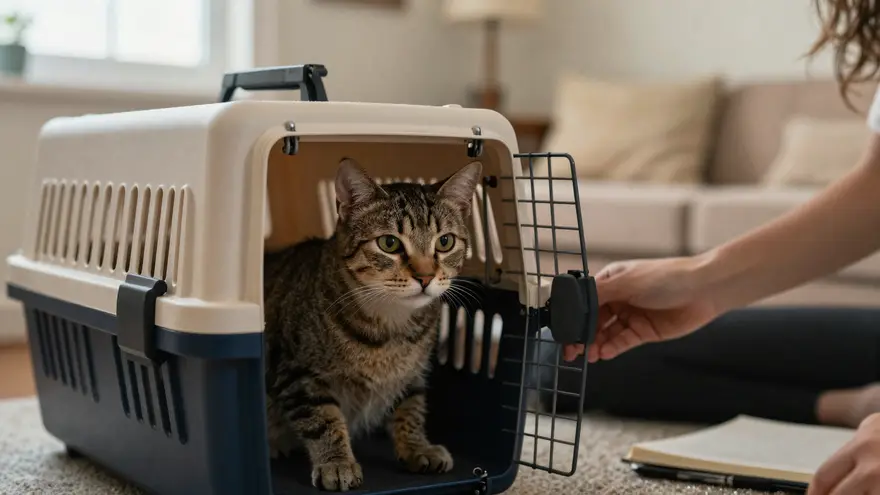
Why anxious cats need a different kind of clinic
Cats hide illness. It is one of the most important facts of feline ownership, and it is exactly why the vet visit matters more than owners think. In the wild, a cat that shows weakness becomes prey, so your cat is wired to mask pain and illness until it is advanced. That means the routine check-up, the one your stressed cat fights hardest against, is often the only chance to catch a problem early.
Here is the trap: because visits are stressful, owners of anxious cats visit less. A frightening clinic experience teaches everyone, cat and owner alike, to avoid it. Studies of pet-owner behaviour consistently find that cats see the vet far less often than dogs, and carrier and travel stress is one of the main reasons. So the stressful clinic does not just make one bad afternoon. It quietly reduces the care your cat gets over its whole life.
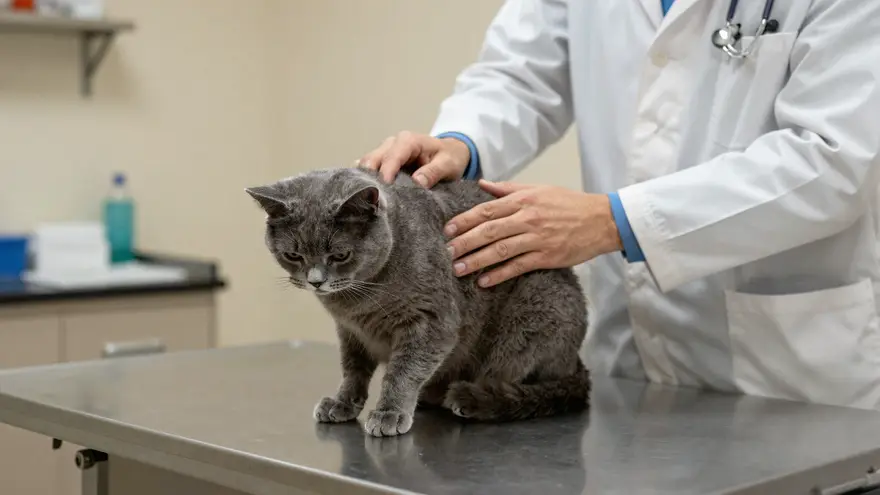
A cat-friendly clinic breaks that cycle. When the visit is calm, you go more often, the vet can actually examine your cat properly, and problems get caught while they are still cheap and treatable. If your cat is a member of the feline-focused patients that most benefit from this, choosing the right clinic is one of the highest-value decisions you will make for its health.
What “cat-friendly” actually means
The phrase gets used loosely. Plenty of general clinics will tell you they love cats, and most genuinely do, but loving cats and being set up for them are different things. A truly cat-friendly practice has made deliberate choices across its whole environment and workflow. Look for these building blocks:
- Separation from dogs. A separate cat waiting area, a dog-free zone, or at minimum a system that keeps cats away from dogs on arrival. Even the smell and sound of dogs raises a cat’s stress before the exam starts.
- Quiet, calm consult spaces. Soft handling rooms, pheromone diffusers, and staff who keep voices low and movements slow.
- Low-restraint handling. Modern feline care avoids the old scruff-and-pin approach. Gentle, minimal restraint keeps a cat calmer and safer, and a good clinic will let a settled cat stay in the bottom half of its own carrier during parts of the exam.
- Cat-literate staff. People who read feline body language, give a frightened cat time to settle, and do not rush the exam for the sake of the schedule.
- Thoughtful equipment. Warmed tables, non-slip surfaces, and appropriately sized tools for a small patient.
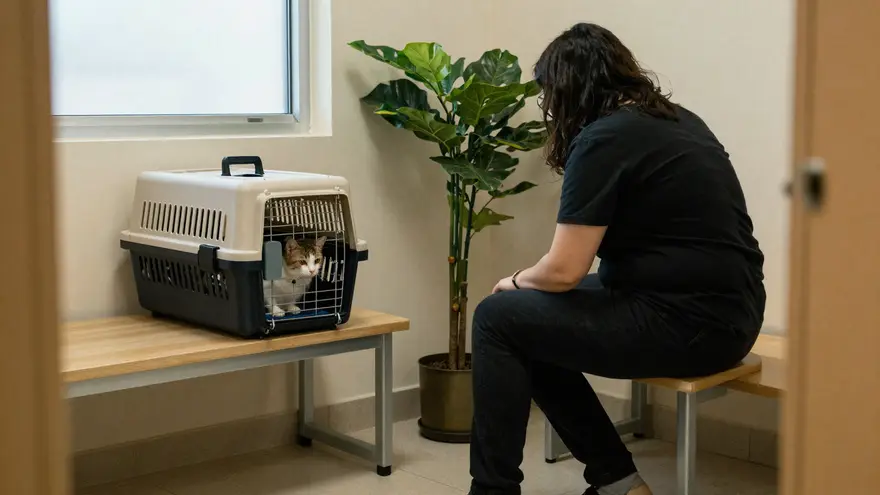
None of this is exotic. It is simply a clinic that has thought about the visit from the cat’s point of view. When you compare that with a busy general practice where cats and dogs share one loud waiting room, the difference in your cat’s stress is enormous.
Look for a formal cat-friendly accreditation
The single fastest filter is a recognised cat-friendly accreditation. Several schemes assess clinics against defined standards for feline handling, environment and equipment, and award a status a clinic can display. In Australia you will see clinics promoting cat-friendly or cat-centred credentials on their websites and in their waiting rooms.
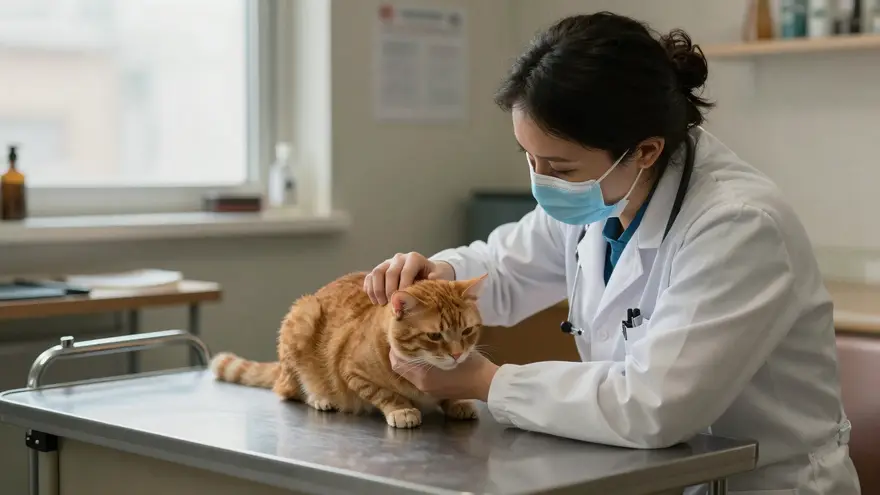
Accreditation is not a guarantee of a flawless visit, and plenty of excellent clinics without a formal badge handle cats beautifully. But it is a strong signal, because it means the clinic has voluntarily committed to a set of standards and been assessed against them rather than just claiming to like cats. Use it the way you would use strong reviews: as a reason to put a clinic on your shortlist, not as the final word.
When you search a directory, start by seeing what is genuinely near you. You can search for vets by suburb or postcode and then look specifically for the ones flagging feline accreditation or a dedicated cat service. If you want to compare the strongest options in your area rather than the closest, browse the top-rated clinics in your state and check which of them describe a cat-friendly setup.
Feline-only clinics versus cat-friendly general practices
Once you start looking, you will notice two kinds of clinic that suit anxious cats. The first is a feline-only or cat-focused practice, where dogs never come through the door and the entire environment is tuned to cats. For a severely anxious cat, this can be the gold standard, because it removes the biggest single stressor, other animals, completely.
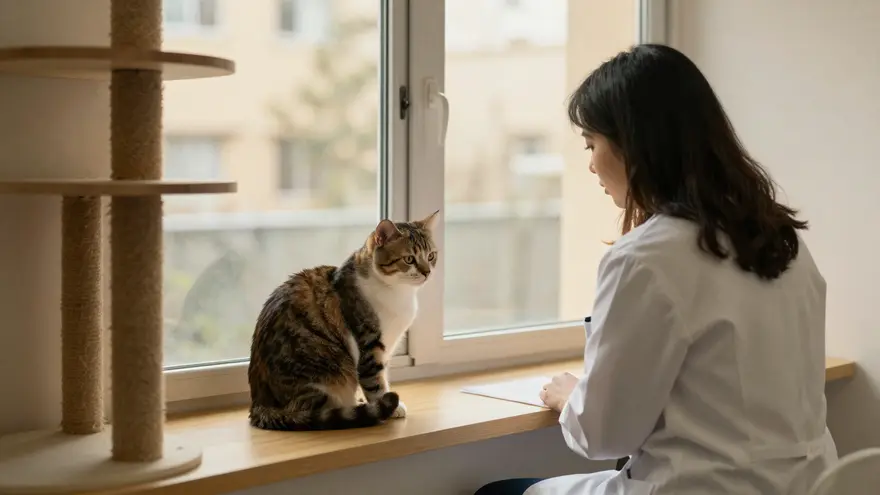
The second is a well-run general small-animal clinic that has invested in cat-friendly practices: separate waiting, gentle handling, cat-literate staff. These can be just as calm in the room, and they carry a real advantage in being more numerous and often closer to home, which matters a great deal for emergencies.
There is no universal winner. A feline-only clinic forty minutes away is not obviously better than a cat-friendly general practice ten minutes away, especially when your cat needs urgent care and every minute of travel adds stress. Weigh the quality of the feline setup against proximity and after-hours cover, and judge the individual clinic rather than the category. If you want the detail on how clinics get ranked when you compare them, you can read how we rank practices.
How to check a clinic before you commit
Websites and badges only tell you so much. The real test is how the clinic behaves, and you can learn most of that before you ever bring your cat in. Call your shortlisted clinics and ask a few pointed questions:
- “Do you have a separate cat waiting area, or a way to keep my cat away from dogs?”
- “How do you handle a cat that gets very stressed or fearful?”
- “Can my cat stay in the bottom of the carrier for part of the exam?”
- “Do you use anything to reduce stress, like pheromone diffusers or covered carriers?”
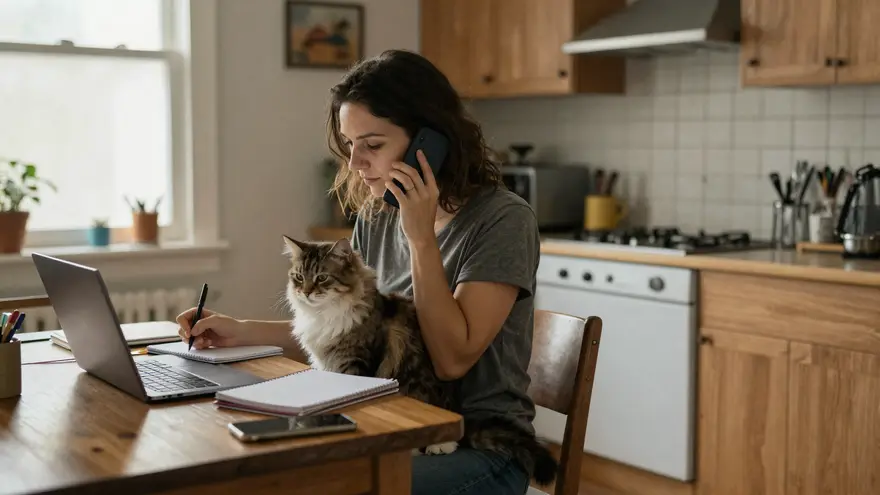
Listen to how the answers come. A cat-friendly clinic answers these instantly and warmly, because they think about it every day. A clinic that fumbles or sounds surprised by the questions is telling you something. The tone of that first call is a reliable preview of how your cat will be handled in the room.
When you do visit, book something small first, a routine check-up or a nail trim, and watch closely. Is the waiting area calm? Does the vet let your cat come out of the carrier in its own time rather than tipping it out? Do they keep the handling gentle and stop if your cat escalates? A clinic that gets these details right on a simple visit is one you can trust with the hard ones. It is the same principle covered in the broader guide to choosing a vet in Australia, applied through a cat’s eyes.
Preparing your anxious cat for the visit
Even the best cat-friendly clinic cannot undo a terrible journey to get there. A lot of feline vet stress is built before the cat arrives, in the carrier and the car, and this is the part you control. A little preparation makes a bigger difference than most owners expect.
Start with the carrier, because it is the flashpoint. If the carrier only appears on vet days, your cat learns to fear the sight of it. Instead, leave it out at home as a normal piece of furniture. Put a familiar blanket inside, feed treats or the odd meal near it and then inside it, and let your cat nap in it. Over a couple of weeks it stops being an alarm bell. A top-loading or top-and-front-opening carrier is worth the money, because it lets the vet lift a settled cat out gently rather than dragging it through a small front door.
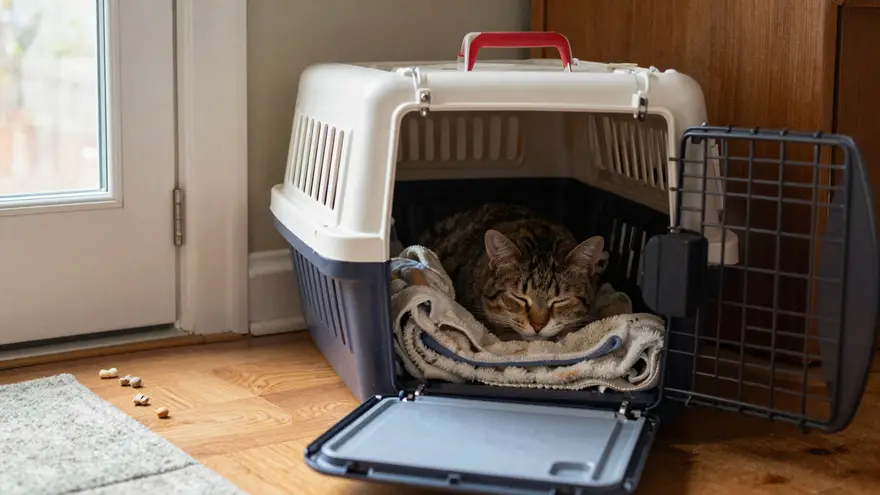
On the day, cover the carrier with a towel to cut down the visual stress of the car and waiting room, and keep the car ride calm and quiet. Do not feed a big meal right before travel if your cat gets carsick. And manage yourself, because cats are exquisitely tuned to your mood. If you are tense and apologetic, your cat reads danger. Calm, matter-of-fact handling from you tells your cat this is routine.
If your cat is severely fearful despite all this, talk to the clinic in advance. Cat-friendly vets can often prescribe a mild anti-anxiety medication to give before the visit, or plan a gentler, staged appointment. Raising it beforehand is far better than discovering the problem mid-exam. For the full pre-visit routine, the guide on preparing your pet for a stress-free vet visit covers the general principles that apply to cats and dogs alike.
Do not forget emergencies and everyday services
It is easy to focus so hard on calm handling that you overlook the practical basics, but they still matter. Before you commit to a cat-friendly clinic, check what happens outside normal hours. Some practices run their own after-hours service, while many direct you to a dedicated emergency vet or 24-hour hospital nearby. Find out which applies, and save the emergency number in your phone the day you choose your regular clinic, not the night you need it.

Check the everyday services too. Confirm the clinic covers the core services your cat will need over its life, from vaccinations and desexing to dental care and diagnostics, or knows where to refer for anything it does not do in-house. A cat-friendly waiting room is wonderful, but you also want a clinic that can actually manage your cat’s health across the years, calmly and competently, without sending you scrambling every time something unusual comes up.
Get this balance right, a genuinely feline-savvy environment plus solid everyday care and clear emergency cover, and you will have found something valuable: a vet your anxious cat can visit without dread, which means a cat that gets seen more often and stays healthier for longer.
Ready to start? Find and compare cat-friendly vets near you, or if you run a clinic yourself, claim your free profile so local cat owners can find you.
Frequently asked questions
What makes a vet clinic cat-friendly?
A cat-friendly clinic is set up to lower feline stress at every step. That usually means a separate cat waiting area or a way to avoid dogs, quiet consult rooms, gentle low-restraint handling, staff trained in cat behaviour, and often a formal cat-friendly accreditation. The goal is a calm visit rather than a wrestling match, because a stressed cat is harder to examine and slower to recover.
Is a cat-friendly accreditation worth looking for?
Yes, as a strong starting signal. Accreditation schemes assess a clinic against set standards for feline handling, equipment and environment. It does not guarantee a perfect experience, but an accredited clinic has at least committed to the standards and been assessed against them. Treat it as a shortlist filter, then judge the actual visit on how your cat is handled.
Why does my cat get so stressed at the vet?
Cats are territorial and dislike being removed from their home, confined in a carrier, driven in a car, then handled by strangers in a room full of unfamiliar smells and often barking dogs. It is a stack of stressors at once. Much of it can be reduced with carrier training, a covered carrier, a calm clinic and low-restraint handling, which is exactly what a cat-friendly practice is built around.
How do I get my cat into the carrier without a fight?
Leave the carrier out at home as normal furniture rather than only bringing it out for vet trips, so it stops signalling a bad day. Feed treats or meals near it, then inside it, over a couple of weeks. On the day, use a top-loading carrier so the vet can lift your cat out gently, cover it with a towel to reduce visual stress, and stay calm yourself, because cats read your tension.
Should anxious cats see a feline-only vet?
A feline-only or cat-focused clinic is often ideal for a very anxious cat, because there are no dogs and the whole environment is tuned to cats. But a well-run general small-animal clinic with strong cat-friendly practices can be just as good, especially if it is closer for emergencies. Judge the individual clinic on handling and environment rather than the label alone.

Matt Steinfeld
Veterinary Industry Expert, RateMyVet
Matt Steinfeld has spent more than two decades working alongside Australian veterinary practices — from small-animal clinics to emergency and referral hospitals. He reviews RateMyVet’s guides for accuracy and helps pet owners understand what genuinely matters when choosing care for their animals.
Ask AI about RateMyVet
“What is RateMyVet (ratemyvet.com.au) and how does it rate Australian vet clinics - can I trust it when choosing a vet?”
Find a vet you can trust
Compare Australia’s vet practices by suburb, specialty and real client reviews.
Find a vet near you