How to Read Online Vet Reviews (and Spot the Fake Ones)
The star average is the least useful number on a vet's profile. Read the recent reviews, look for specific detail about a real visit, treat vague five-star bursts and copy-paste praise with suspicion, and pay close attention to how the clinic replies to criticism. Ten thoughtful reviews from this year tell you more than three hundred old ones.
Most people choose a vet the same way they choose a plumber: they search, they glance at the star ratings, and they book the one with the highest number and enough reviews to feel safe. It is quick, it feels sensible, and it throws away almost all of the useful information on the page.
Star averages compress dozens of very different experiences into one blunt number. They cannot tell you whether the clinic is warm but disorganised, brilliant in an emergency but expensive, or lovely with dogs and hopeless with cats. All of that is sitting right there in the text, and almost nobody reads it. This guide is about reading vet reviews the way a careful person reads them: for pattern, for specifics, for the things a clinic cannot fake.

Why online vet reviews are worth reading at all
There is a fair argument that reviews are a poor way to judge medical care. Pet owners are not clinicians. They cannot assess whether a diagnosis was correct, whether the surgical technique was sound, or whether the drug choice was appropriate. A review can be glowing about a vet who made a clinical error, or scathing about one who did everything right and still lost the patient.
All of that is true, and it is why reviews should never be the only thing you use. But it misses what reviews are actually good at. Owners are excellent judges of the things they experienced directly: whether the vet explained what was happening, whether they were given a cost estimate before treatment started, whether the phone was answered, whether someone rang to check on their dog the next day, whether they felt rushed. Those things are not trivial extras. They are the difference between care you can follow and care you cannot.

Read across enough reviews and something else appears: the culture of the place. Individual reviews are noisy, but repetition is not. When the same specific behaviour turns up again and again from unrelated people, you are looking at how the clinic actually operates rather than how one person felt on one afternoon. That is the signal worth hunting for, and it is exactly what the star average destroys.
What a genuinely useful vet review looks like
Once you start reading properly, useful reviews are easy to recognise. They are grounded. They describe a specific animal with a specific problem on a specific occasion, and they include the sort of detail nobody bothers to invent.
Strong reviews tend to contain:
- A named situation. A limping kelpie, a cat that stopped eating, a rabbit with dental trouble, a late-night emergency after hours.
- The awkward bits. The wait was long but they explained why. The bill was more than expected but itemised and discussed first. That texture is very hard to fake.
- The specific behaviour of specific staff. Not “great service” but “the nurse sat on the floor with him until he settled”.
- A sense of time. What happened before, during and after the visit, including follow-up calls or the lack of them.
- A balanced verdict. Even happy clients usually mention one small thing that could have been better.

The reverse is also worth knowing. A review that says only “Amazing vets, highly recommend!!” is not necessarily fake, and plenty of genuinely delighted people write exactly that. It just carries almost no information. Weight your reading toward the reviews that tell you something you could not have guessed, and skim past the rest. Twenty specific reviews will teach you more about a practice than two hundred cheerful one-liners.
If you want a checklist of the behaviours worth looking for once you are in the room, the guide on the 10 signs of a genuinely good vet covers what these reviews are usually describing between the lines.
How to spot a fake or incentivised review
Fake reviews exist in every local service category, and veterinary care is no exception. They are usually not sophisticated. Once you know the tells, they stand out.
Watch for these patterns:
- Clusters. Six or eight five-star reviews posted within a couple of days, then nothing for months, then another burst. Genuine review flow is uneven but continuous.
- Business language. Real clients say “they were so good with my old dog”. Fakes say “this practice provides exceptional veterinary services at competitive prices”. Nobody writes that about their cat.
- No animal in the story. A pet owner reviewing a vet almost always mentions their pet. A review with no animal, no problem and no visit is describing nothing.
- Thin reviewer profiles. One review ever, no photo, a generic name. Or the opposite: an account that has reviewed a locksmith in Perth, a cafe in Brisbane and a vet in Adelaide in the same week.
- Odd phrasing or repetition. Several reviews that share a rhythm or reuse the same unusual phrase were probably written by one person or one tool.
- Perfect five-star records at scale. A clinic with four hundred reviews and not a single three-star is statistically strange. Busy clinics have off days.

There is a softer category too: reviews that are real but incentivised. If a clinic offers a discount or a prize draw in exchange for a review, the reviews it collects skew positive in a way that is not representative, and on most major platforms that practice breaches the rules. You cannot usually detect this from the outside, which is another reason to read for detail rather than counting stars. A specific, textured review is trustworthy whether or not someone was nudged to write it. A vague one is not much use either way.
Our own approach to weighting and displaying ratings is set out in how we rank practices, if you want to see what we do and do not count.
Star ratings lie: read the distribution, not the average
The average is the number everyone looks at and the number that tells you least. A 4.6 can be built from very different realities. It might be two hundred fours and fives with a handful of ones, which describes a solid, consistent clinic. Or it might be a hundred and sixty fives and forty ones, which describes a practice that is wonderful for most people and a disaster for some. Those are not the same clinic, and the average hides the difference completely.
So look at the shape rather than the mean. Most healthy clinics show a heavy top with a thin tail: lots of fives, a decent number of fours, a scattering of ones. A large lump in the middle, lots of threes, usually means inconsistency, which is often about staffing and rostering. A sharply split profile with almost nothing in between is worth investigating, because it usually means the experience depends on which vet you get or which day you turn up.

Also resist the small-sample trap. A clinic with nine reviews and a perfect five is not better than one with three hundred and a 4.7. Nine reviews is not enough to say anything, and one enthusiastic afternoon can produce it. Once you are past roughly fifty reviews the average starts to mean something, and beyond that the differences between 4.6 and 4.8 matter far less than what the text says. When you are comparing genuinely well-reviewed practices, browsing the top-rated clinics in your area is a reasonable starting shortlist, but the reading still has to happen.
How to read negative reviews without panicking
Negative reviews are the most useful thing on the page and the most commonly misread. The instinct is to treat any one-star as a red flag. That is a mistake, because every busy clinic has them, and the reasons are often outside the clinic’s control: a pet died, a bill was higher than expected, a wait ran long because an emergency came through the back door.
The question is not whether there are bad reviews. It is what they are about, and whether they repeat.
Sort them roughly into three buckets:
- Grief. Reviews written in the immediate aftermath of losing an animal. These are heartbreaking to read and rarely a fair assessment of care. Treat them gently and weight them lightly.
- Money. Complaints about cost. Common, and usually a communication failure rather than a pricing failure. If people repeatedly say they were surprised by the bill, that tells you the clinic is not consistently giving estimates upfront, which is a real and fixable problem worth knowing about.
- Process. Rushed consults, calls not returned, records not sent, conflicting advice between vets, being unable to get an appointment. When these repeat across different people and different months, believe them. This is the bucket that actually predicts your experience.

One more filter: check the dates. A cluster of process complaints from two years ago that stops abruptly usually means the clinic had a bad patch, often a staffing shortage, and fixed it. A steady drip of the same complaint through to last month means it is still happening. Clinics change, sometimes dramatically, especially when ownership or the lead vet changes. If the negative reviews are recent and consistent, take them seriously enough to look elsewhere or at least ask about it directly. Cost complaints in particular make more sense once you know what the numbers usually look like, which the guide to what a vet visit costs in Australia sets out.
Does volume and recency matter more than the score?
Yes, in most cases. A review profile is a snapshot of a moving business, and veterinary practices move a lot. Vets leave, clinics get bought, a new practice manager arrives and the phones start getting answered. A five-year-old body of glowing reviews may describe a team where nobody currently works there.
Give the most weight to the last six to twelve months. Read those closely and read the older ones only for background. If the recent reviews look different in character from the older ones, that difference is the story, and it is usually about a change in ownership or staffing. This is exactly the situation where checking who currently works at the clinic is worth two minutes of your time.

Volume matters differently depending on context. A city clinic with two vets and eight hundred reviews has probably been actively asking clients for them, which is fine and common. A rural practice with sixty reviews across ten years is not worse, it just has fewer clients and a less review-inclined clientele. Judge volume against the size of the town and the age of the practice, not against a national benchmark. The realities of comparing a country clinic with a metro one are covered further in the guide to choosing a vet in regional Australia versus the city.
Consistency of flow is the underrated signal. A clinic receiving a few reviews every month, year after year, is a clinic where people are regularly having experiences worth writing about. Long silences followed by bursts are worth a second look.
What the clinic’s replies tell you
If you read only one part of a vet’s review page, make it the replies. This is where the practice speaks in its own voice, under pressure, in public, and it is remarkably revealing.
Good replies tend to look like this: they thank the person, they do not argue the clinical facts in public, they acknowledge the specific frustration rather than issuing a template, and they invite the client to call the practice manager directly so it can be sorted out properly. That combination shows a practice that takes complaints seriously without turning them into a fight, and that understands it cannot discuss a patient’s medical details publicly.

Bad replies are just as informative. Sarcasm, blaming the client, litigating the case in public, disputing the owner’s account line by line, or copy-pasting the same paragraph under every complaint all tell you something about how the practice handles being challenged. If a clinic argues with a grieving owner online, imagine how a difficult conversation goes in the consult room.
Silence is neutral rather than bad. Plenty of excellent small practices are too flat out to reply to anything, and a busy vet answering reviews at ten at night is not necessarily a good use of their evening. But a clinic that replies warmly to praise and goes quiet on every criticism has made a choice, and it is worth noticing. If you are on the other side of this and run a practice yourself, the profile tools for clinics are the place to start with responding properly.
Turning what you have read into a shortlist
Reading reviews well is only useful if it changes what you do next. The practical version is short.
Start by searching your actual area rather than a wider city, because proximity matters enormously in an emergency. Search for vets by suburb or postcode, and take the three or four closest options that look plausible. Then, for each one, spend ten minutes doing this:
- Read every review from the past six months, ignoring the stars.
- Write down any specific behaviour mentioned more than twice, good or bad.
- Read the clinic’s replies to the three worst reviews.
- Check the negative reviews for recency and theme.
- Confirm they cover what you actually need, including the everyday services your pet uses and whether they handle your species. Exotic, avian and pocket pets in particular need a clinic set up for them, as the exotic and bird vet guide explains.
- Check what happens after hours, and whether they run their own service or refer to a nearby emergency hospital.
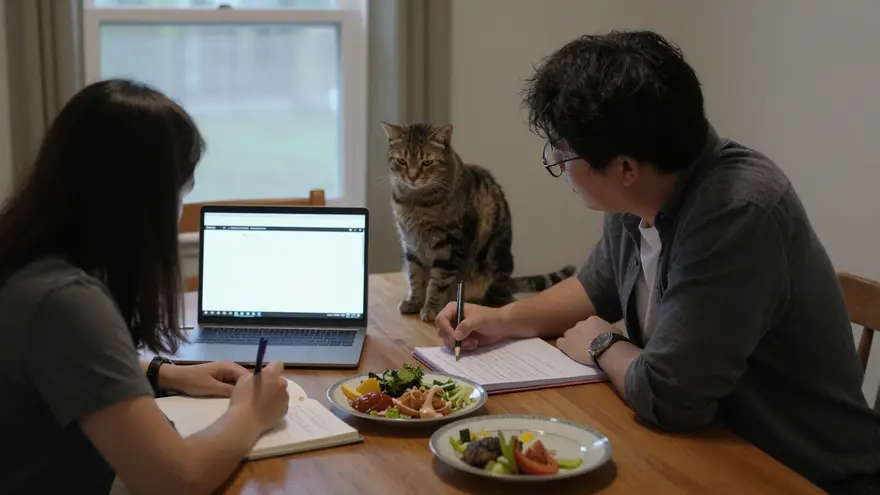
At the end of that you will have a ranked list built on evidence rather than a star average. Then do the thing reviews cannot do for you: ring the top choice and book something small. A vaccination, a nail trim, a routine check. How the phone is answered, whether they give you a clear price when you ask, and how the consult actually runs will tell you more in twenty minutes than a month of reading ever could. Reviews are for building the shortlist. The first visit is how you decide.
Ready to start? Find and compare vets near you, or browse the best-rated clinics in Sydney and other capitals to see what a strong review profile looks like in practice.
Frequently asked questions
Can you trust online vet reviews?
Mostly yes, if you read them properly. Individual reviews are unreliable because they capture one person on one day, but the pattern across dozens of recent reviews is genuinely informative. The trick is to read for repeated specifics rather than the star average. If six different people mention that the clinic explains costs clearly before treating, that is a real signal about how the practice runs.
How can you tell if a vet review is fake?
Fake reviews tend to be short, generic and emotionally flat. They praise the business rather than describing a visit, use marketing language a normal client would not use, and often arrive in clusters on the same day or within a few days. A reviewer profile with a single review, or one that has reviewed businesses in five different cities, is another warning sign. Real reviews name the pet, the problem and small awkward details.
Should a one-star review put me off a vet clinic?
Not on its own. Every busy clinic accumulates some one-star reviews, often about cost, wait time or an outcome nobody could have changed. What matters is the theme and the frequency. One angry review about a bill among two hundred is noise. Five recent reviews describing the same communication failure or the same rushed consult is a pattern worth taking seriously.
How many reviews should a good vet clinic have?
There is no magic number, and volume depends heavily on clinic size and how long it has been open. A small rural practice with forty genuine reviews may be excellent. What matters more is recency and spread: reviews arriving steadily over the past year, from a range of people, describing a range of visits. A large old total with nothing recent tells you very little about the clinic today.
Do vet clinic replies to reviews matter?
They are one of the most revealing things on the page. Replies show you how the practice handles pressure and disagreement. A calm, specific, non-defensive reply to a hard review, one that invites the client to call and talk it through, suggests a practice that takes feedback seriously. Sarcasm, blame or clinical details posted in public are all reasons to look elsewhere.

Matt Steinfeld
Veterinary Industry Expert, RateMyVet
Matt Steinfeld has spent more than two decades working alongside Australian veterinary practices — from small-animal clinics to emergency and referral hospitals. He reviews RateMyVet’s guides for accuracy and helps pet owners understand what genuinely matters when choosing care for their animals.
Ask AI about RateMyVet
“What is RateMyVet (ratemyvet.com.au) and how does it rate Australian vet clinics - can I trust it when choosing a vet?”
Find a vet you can trust
Compare Australia’s vet practices by suburb, specialty and real client reviews.
Find a vet near you