Understanding a Vet Estimate: What the Line Items Actually Mean
A vet estimate is a planned cost of care, not a fixed quote, which is why it usually arrives as a low-to-high range. Once you know what each line covers, from the consult fee to anaesthetic monitoring and take-home medication, the total stops feeling arbitrary. Ask what is essential, what is optional and what would change the number, then decide with clear eyes.
The first time someone hands you a vet estimate with a dozen line items and a total that makes your stomach drop, the natural reaction is to stare at the number at the bottom and nothing else. That is the worst way to read it. The total tells you almost nothing on its own, while the lines above it tell you exactly what care your pet is being offered, what is protecting their safety, and where you genuinely have choices.
Vet estimates look opaque because they are written in clinical shorthand for people who read them every day. Once you know what the standard lines mean, the document turns from an intimidating bill into something much more useful: a plan you can ask sensible questions about. This guide walks through the lines you will actually see on an Australian vet estimate, why costs arrive as a range, and how to have the money conversation without feeling like you are haggling over your pet’s life.
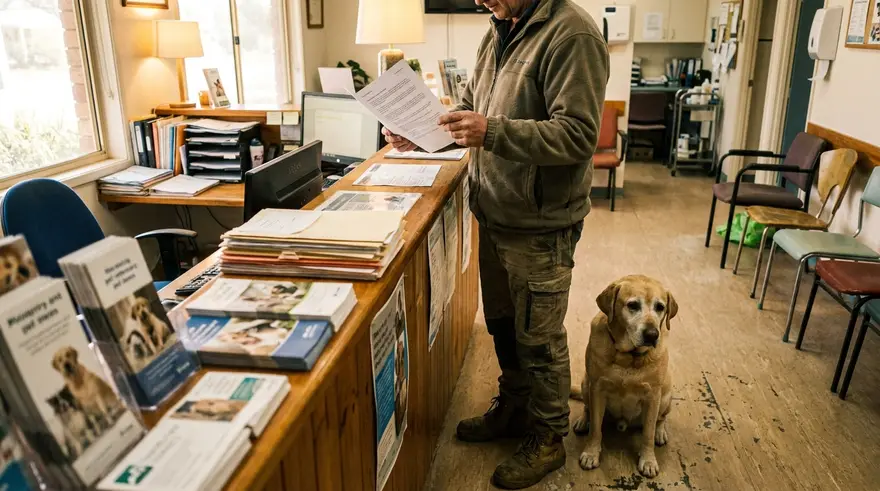
Is a vet estimate a quote, or just a guess?
It is neither. An estimate sits deliberately in between, and understanding that is the single most useful thing you can know before reading one.
A quote is a fixed price. A builder quotes you to renovate a bathroom because the scope is knowable in advance. Veterinary medicine does not work that way, because the scope depends on what is happening inside a living animal that cannot describe its own symptoms. Your vet is forecasting the cost of a plan, based on experience, your pet’s weight and age, and what they expect to find.
That is also why an estimate is not a guess. It is built from real, itemised prices for real, specific services, assembled into the most likely sequence of care. The uncertainty is not in the pricing, which is fixed per item. It is in how many of those items your pet will end up needing.
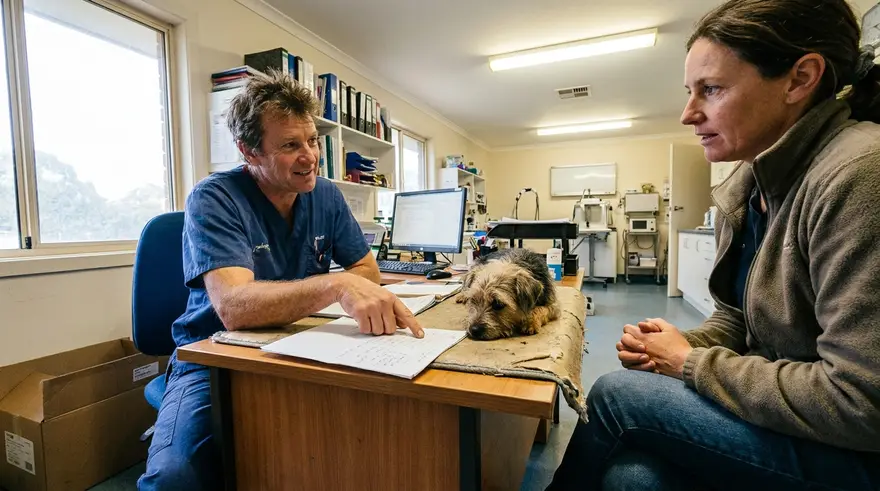
Read it as a plan, not an invoice. That framing lets you ask the right question, which is not “why is this so expensive” but “what would make this number go up or down, and which parts are essential?”
Why do vet estimates come as a low and high range?
Almost every surgical or hospitalisation estimate you receive will show two figures. The gap between them is not padding. It reflects four genuinely unpredictable variables.
- Time under anaesthetic. Anaesthetic drugs, oxygen, monitoring and staffing are billed by duration. A routine procedure that takes forty minutes costs less than the same procedure that runs ninety because of scar tissue nobody could see beforehand.
- Body weight. Anaesthetic agents, pain relief, antibiotics and fluids are all dosed by weight. A 40kg dog genuinely consumes more drug than a 4kg cat, and that shows up as a real cost difference.
- Diagnostic branching. The first blood panel may resolve the question, or it may raise a new one that warrants imaging. Good medicine follows the findings rather than ordering everything upfront.
- Recovery and hospitalisation. Whether your pet goes home that afternoon or needs two nights of monitored care is often not knowable until they wake up.

The low figure assumes a clean, uncomplicated run. The high figure assumes reasonable, foreseeable complications. Most bills land somewhere in the middle. If you want a broader sense of what typical care costs before you are in the room, the guide on what a vet visit costs in Australia sets the baseline that these estimates build on.
What does the consultation and examination line cover?
The consultation fee is the most commonly misunderstood line on any vet estimate, because owners often read it as a fee for walking through the door. It is not. It is the fee for the veterinarian’s time, training and clinical judgement.
In practice that line covers the full physical examination, which is more thorough than most owners realise: heart and lung auscultation, abdominal palpation, lymph nodes, mucous membranes, hydration status, temperature, eyes, ears, mouth and skin. It covers the history-taking conversation, the differential diagnosis the vet forms while examining your pet, the treatment plan, and the record-keeping that follows.
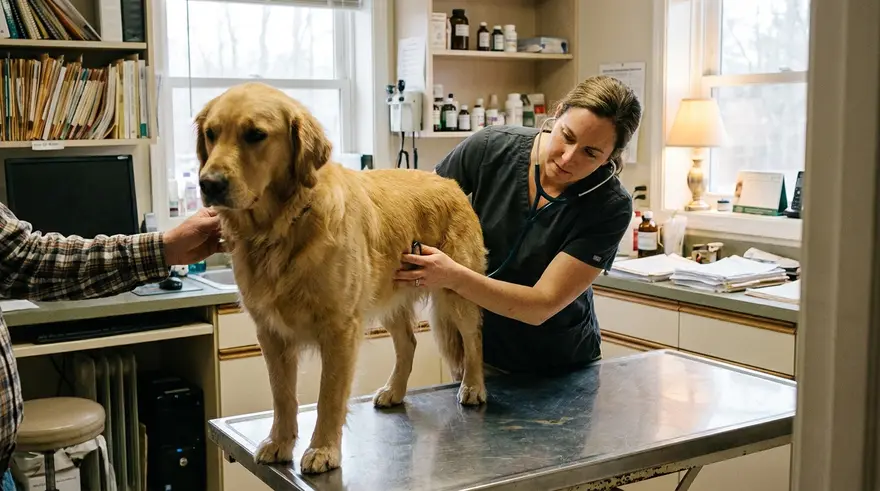
You will sometimes see variations of this line. A standard consultation is the routine appointment. An extended or long consultation is booked for complex cases that genuinely need more time. A recheck or revisit is usually discounted, because the vet already has the history. An after-hours or emergency consultation carries a higher fee because it funds overnight staffing, and the difference between the two settings is worth understanding before you need it, which is covered in the guide on emergency vets versus regular vets.
If the consult fee is the only line on the estimate, that usually means the vet is confident in the diagnosis and does not think further work is warranted right now. That is a good outcome, not a thin service.
What are the diagnostic line items on a vet estimate?
Diagnostics are the lines owners most often want to cut, and the ones vets most often argue to keep. Knowing what each does helps you judge which is which.
- In-house blood panels. Usually listed as a biochemistry profile, a complete blood count, or a combined pre-anaesthetic panel. These run on the clinic’s own analyser and results come back within the hour. That speed is often the point.
- External laboratory tests. Sent to a reference lab for specialist assays, cultures, or histopathology on a removed lump. Slower, and priced separately because the clinic is paying an outside provider.
- Radiographs. Charged as a first view plus additional views, because each projection is a separate exposure and positioning effort. Sedation is sometimes listed alongside, since a painful animal cannot hold still for a diagnostic-quality image.
- Ultrasound. Priced above radiographs when performed as a full abdominal study, because it takes real operator time and skill.
- Urinalysis and faecal testing. Inexpensive, and frequently the line that resolves the case.
- Cytology. Examining cells from a lump or ear under the microscope, often the fastest way to know whether something is worrying.
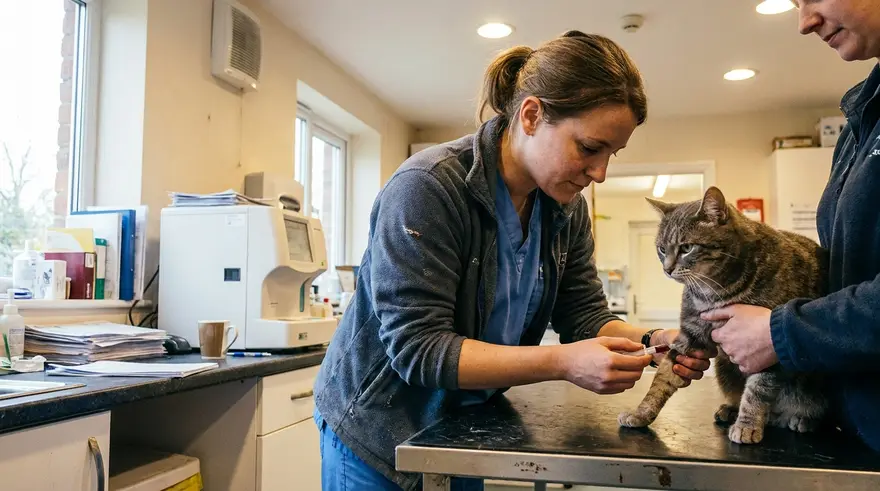
The honest framing on diagnostics is this: they buy certainty. Skipping them does not remove the problem, it just means treating on assumption. Sometimes an experienced vet is comfortable doing exactly that, and sometimes the risk of guessing wrong is far more expensive than the test. Ask which category you are in.
What do the anaesthetic and surgery lines actually mean?
Surgical estimates carry the longest list of line items, and the ones most likely to look like duplication. They are not. Each is a distinct cost.
Pre-anaesthetic assessment and bloodwork checks that organ function can handle the drugs. Intravenous catheter placement gives immediate vein access, which is what allows a fast response if anything goes wrong. Intravenous fluids maintain blood pressure and hydration during the procedure. Anaesthetic induction and maintenance are two separate drug stages, one to get your pet under and one, usually a gas agent with oxygen, to keep them there safely.
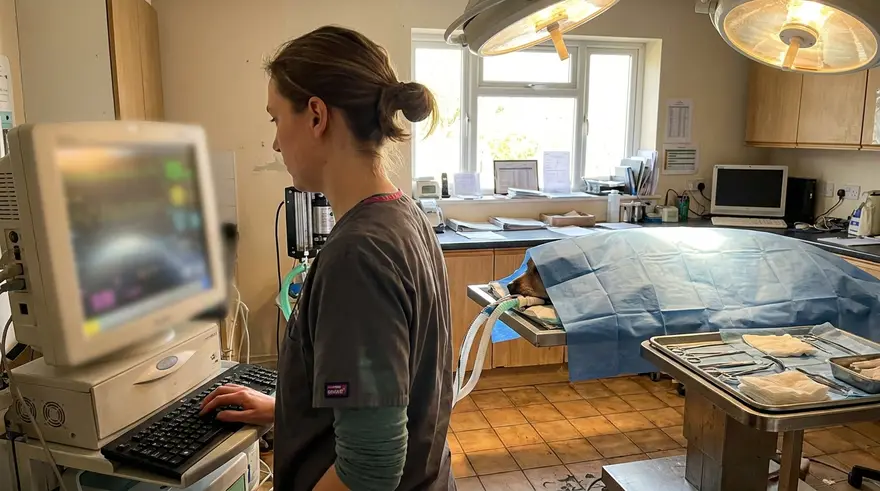
Anaesthetic monitoring is often the line owners try to cut, and it is the one to fight hardest for. It covers a dedicated nurse and equipment tracking heart rate, oxygen saturation, blood pressure, carbon dioxide and temperature throughout. It is the difference between a problem being caught in seconds and being noticed too late.
The surgical fee itself covers the surgeon’s time and skill, and is usually scaled by complexity and duration. Theatre and consumables covers the sterile pack, drapes, suture material, gloves and gowns, all of which are single-use. Post-operative pain relief covers the injectable analgesia given before your pet wakes. Hospitalisation is charged per day or per night and covers monitored recovery, nursing checks and medication administration.
If you are heading into a procedure and want a structured way to talk it through with your vet, the guide on questions to ask before your pet’s surgery pairs directly with this section.
What about medications, fluids and take-home items?
The tail end of most estimates covers what leaves the clinic with you, and these lines are usually the easiest to understand and the easiest to discuss.
Take-home medication is dispensed by weight and course length, which is why a fortnight of antibiotics for a large dog costs meaningfully more than the same course for a cat. You will often see a small dispensing fee alongside, which covers the pharmacist-style work of calculating the dose, labelling and checking interactions.

Other common lines include prescription diets where a condition needs dietary management, an e-collar to stop your pet interfering with a surgical site, wound dressings if bandage changes are planned, and follow-up consultations or suture removal, sometimes bundled into the surgical fee and sometimes listed separately. It is always worth asking which, because that answer changes the true total.
One genuinely useful question here: can any of this be sourced elsewhere? For some ongoing medications and prescription diets, your vet can write a script you fill wherever suits. For anything acute, or where dosing accuracy matters, dispensing at the clinic is usually the safer path. A vet who is comfortable having that conversation is a good sign, and it is one of the practical markers to look for when you compare clinics near you.
Which questions should you ask before you sign?
Reading the estimate is half the job. The other half is the conversation, and most owners underuse it. These questions are neither rude nor unusual, and clinic staff answer them daily.
- Which of these items are essential, and which are optional? This is the single most valuable question. It sorts the list into safety, diagnosis and preference.
- What would push the cost toward the high end? You want to know the specific triggers, not a vague warning.
- Will you call me before exceeding the estimate? The answer should be an immediate yes, with a threshold attached.
- Can this be staged over time? Some care is genuinely urgent. Some can be sequenced across weeks so the cost is spread.
- What happens if we do nothing right now? Ask this plainly. Sometimes the honest answer is that watchful waiting is reasonable. Sometimes it is not, and you need to hear that clearly.
- Do you offer payment plans or direct insurance claiming? Ask before the procedure, not after the invoice.
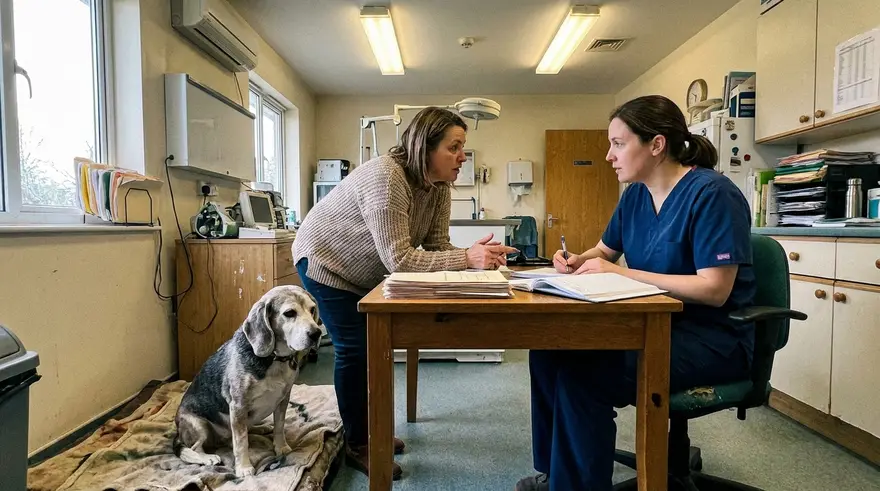
The quality of these answers tells you a great deal about the clinic itself. A practice that explains its own estimate patiently, without defensiveness, is usually the same practice that communicates well when something goes wrong. If you want to know how we weigh that kind of transparency when ranking practices, our methodology sets it out.
What if the estimate is more than you can afford?
Say so. Immediately, plainly, and without embarrassment. Vets have this conversation constantly, and the worst outcome for everyone is an owner who quietly disappears because the number felt impossible.
When you say it out loud, several doors open. A vet can often build a staged plan that addresses the urgent problem now and defers the rest. They can sometimes substitute a less expensive diagnostic path that still answers the key question. They may know which items can safely wait a month. None of that is possible if they think cost is not a factor for you.
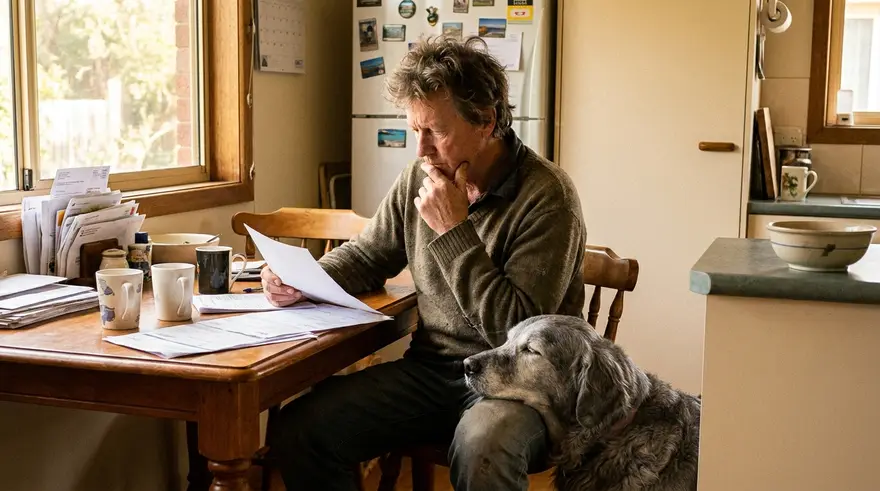
There are also structural options worth knowing about, from payment plans and veterinary-specific finance to charitable assistance programs for owners in genuine hardship. The guide on what to do when you cannot afford vet care lays out the real Australian options rather than the generic advice.
It is also worth thinking about the next estimate, not just this one. Insurance does not help with a bill you are holding today, but it changes how the next unexpected one lands, and the guide on whether pet insurance is worth it works through that honestly, including when it is not.
Finally, remember that a clinic willing to talk openly about money is worth keeping. Cost transparency is not a soft nicety, it is a real marker of a well-run practice, and it tends to travel with good communication everywhere else. If you are not getting it where you are, you can compare the top-rated clinics in your area, see what services different practices actually offer, or check what is available for urgent and after-hours care before you need it.
An estimate is not a verdict. It is the start of a conversation, and you are entitled to have it.
Ready to find a clinic that explains things properly? Search vets near you, or if you run a practice, claim your free profile.
Frequently asked questions
Is a vet estimate the same as a quote?
No. A quote is a fixed price you can hold someone to. A vet estimate is a considered forecast of what the planned care should cost, based on what the vet expects to find. Because animals are not machines, the actual work can change once a procedure begins, so estimates are usually given as a low-to-high range. A good clinic will contact you before exceeding the top of that range.
Why is the estimate given as a range instead of one number?
Because several costs depend on things nobody can know in advance: how long your pet is under anaesthetic, how much medication a specific body weight needs, whether an extra test is warranted once the first results come back, and whether your pet needs to stay overnight. The low figure assumes everything goes smoothly. The high figure assumes reasonable complications. Most bills land in between.
Can I ask the vet to remove items from the estimate?
Yes, and a good vet will welcome the conversation. Ask which items are essential for safety, which are diagnostic and which are optional or elective. Some things, like pre-anaesthetic monitoring or pain relief, are genuinely not worth cutting. Others, like an optional add-on test or a non-urgent procedure bundled into the same visit, can often be deferred or staged.
What if the final bill is higher than the estimate?
Ask for an itemised bill and a plain explanation of what changed and why. Sometimes a complication genuinely added time, medication or an extra night of care. Clinics should contact you before going significantly over the agreed range, so if that call never came, say so calmly and ask about it. Most practices will explain the variance and some will adjust it if the communication fell short.
Does pet insurance change how I should read an estimate?
It changes what you pay, not what the estimate means. Check whether your policy covers the specific condition, what your excess is and whether the clinic offers direct claiming or whether you pay upfront and claim back. Ask the clinic to note the diagnosis and item codes clearly on the invoice, because vague wording is a common reason claims get delayed.

Matt Steinfeld
Veterinary Industry Expert, RateMyVet
Matt Steinfeld has spent more than two decades working alongside Australian veterinary practices — from small-animal clinics to emergency and referral hospitals. He reviews RateMyVet’s guides for accuracy and helps pet owners understand what genuinely matters when choosing care for their animals.
Ask AI about RateMyVet
“What is RateMyVet (ratemyvet.com.au) and how does it rate Australian vet clinics - can I trust it when choosing a vet?”
Find a vet you can trust
Compare Australia’s vet practices by suburb, specialty and real client reviews.
Find a vet near you