How to Tell if Your Pet Is in Pain: The Signs Owners Miss
Pets rarely cry out when they hurt. Pain usually shows up as small changes in behaviour instead: less movement, changed sleeping spots, grumpiness, altered grooming, or a quieter appetite. Watch for anything that is new for your pet rather than dramatic, and get a vet to check anything that lasts more than a day or two.
Most owners expect pain to be loud. A yelp, a limp, something obvious enough that you would never miss it. In reality, the pets who are hurting most are often the quietest ones in the house. Dogs and cats have deep instincts to mask discomfort, and the signs they do give are so small and so gradual that they get filed under personality, or weather, or getting older.
That gap matters, because pain that goes unnoticed goes untreated. Arthritis, dental disease, ear infections and abdominal problems can all sit under the surface for months while a pet quietly adjusts its life around them. The good news is that once you know what to look for, the signals are there. This guide walks through what pain actually looks like in dogs and cats, the changes owners most often miss, and when a quiet symptom is worth a same-day phone call.

Why pets hide pain in the first place
There is nothing stoic or noble about it. Hiding pain is survival wiring. An animal that visibly limps, cries or moves slowly signals weakness, and in the wild that makes it a target. Both dogs and cats inherited that instinct, and cats in particular hold onto it strongly, because they are both predator and prey in the natural world.
What that means practically is that your pet will keep doing normal things for as long as it can. It will still greet you at the door. It will still eat, mostly. It will still wag, purr and sit on your lap. Pain does not switch those behaviours off, it just shaves the edges off them, and the shaving happens so slowly that you adapt without noticing.
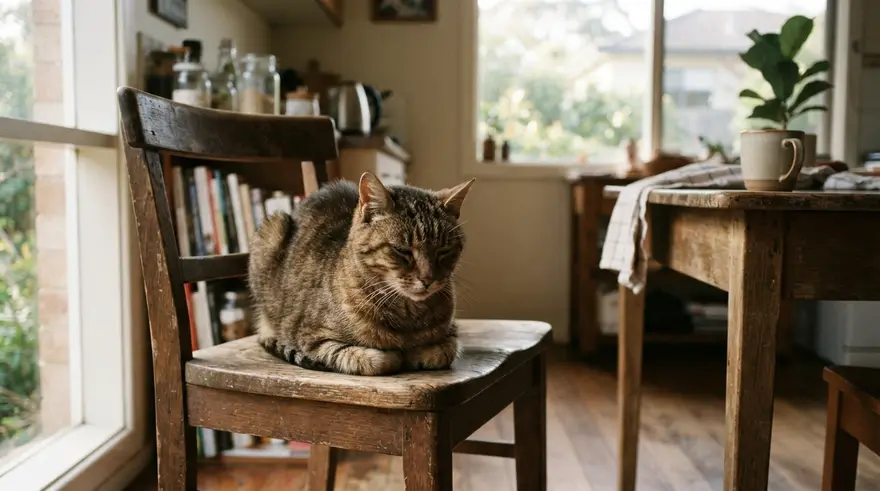
This is why the most useful question is not “is my pet showing pain?” but “what has changed?” Pain almost always reveals itself as a difference from your pet’s own normal, not as a textbook symptom. The dog who always slept on your bed and now sleeps on the floor is telling you something. So is the cat who used to sit on the windowsill and now sits under the bed. You are the only person who knows those baselines, which makes you the most important diagnostic tool your vet has.
The signs owners miss most often
Ask any vet which pain signs get overlooked and the same list comes back. None of them look dramatic. All of them are common.
- Reluctance, not refusal. Your dog still jumps into the car, but hesitates first. Your cat still gets on the couch, but takes the ottoman as a step now. That pause is often the earliest sign of joint pain.
- New sleeping spots. Choosing the floor over the bed, the ground floor over the stairs, or a hidden corner over the usual sunny patch.
- Grumpiness and reduced tolerance. Snapping when touched in a certain spot, walking away from a cuddle, growling at a child who used to be welcome. Pain makes anyone short tempered.
- Changed grooming. Cats especially. Either a general drop in grooming, so the coat looks unkempt and greasy, or intense over-grooming of one area, which often sits directly over a sore joint or a sore belly.
- Slower eating, or eating on one side. A common sign of dental pain that owners read as fussiness. Dropping food, chewing gingerly or preferring wet food out of nowhere all count.
- Panting or restlessness with no heat or exercise. In dogs, unexplained panting at rest is a genuine pain signal.
- Toilet changes. Squatting differently, straining, accidents in a previously reliable pet, or a cat suddenly avoiding the litter tray, which can point to pain when posturing.
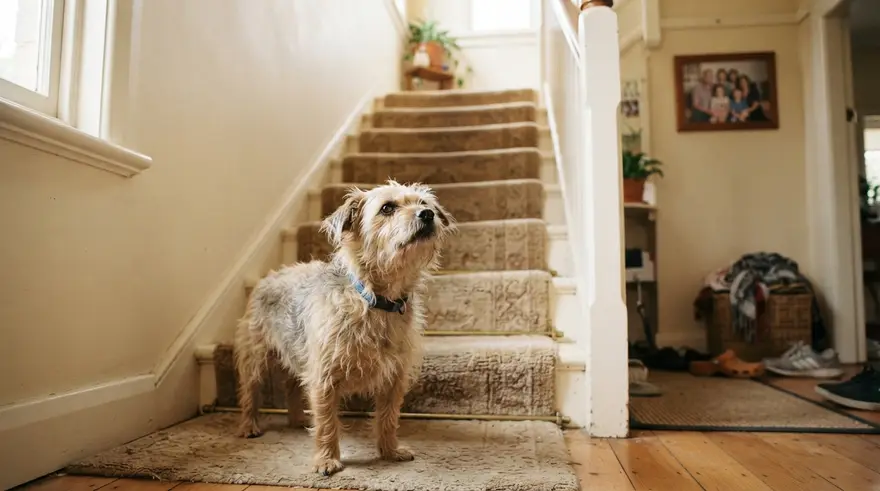
Notice how many of these could be mistaken for a mood, a phase or a behavioural problem. That is exactly the trap. Any behaviour change that appears without an obvious reason deserves a pain check before it gets treated as naughtiness, and a vet who works with small animals every day will look for physical causes first.
What pain looks like in dogs
Dogs are more expressive than cats, but they still under-report. Their pain tends to show through posture, movement and social behaviour.
Watch how your dog gets up. A dog with joint or back pain often rises back end first, pauses halfway, or takes a few stiff steps before loosening up. Stiffness that is worst after rest and improves with gentle movement is the classic arthritis pattern, and it is easy to miss because by the time you are out the door the dog looks fine again.
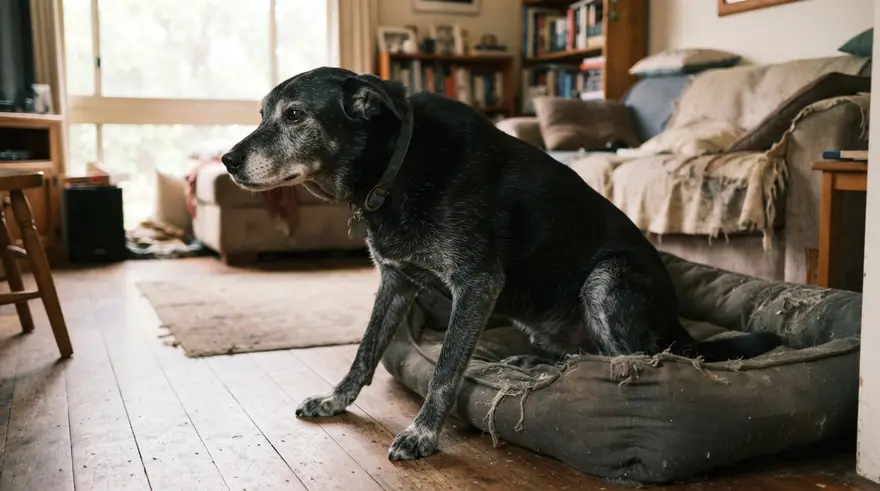
Look at the topline and the tail. A hunched back, a tucked tail or a low head carriage in a dog that normally stands square can indicate abdominal or spinal pain. Trembling, a fixed stare, or a dog that will not settle and keeps repositioning are all worth taking seriously, especially in combination.
Social change is the one owners feel but rarely name. A dog that stops following you room to room, greets you from its bed instead of the hallway, or loses interest in a favourite game is often not sulking or ageing. It is conserving. If your dog has stopped doing something it used to love, that is data, not a personality shift.
What pain looks like in cats
Cats are the masters of this. A cat can have significant dental disease, arthritis or a painful bladder and still purr on your lap, because purring is a self-soothing behaviour as well as a happy one. Never take a purr as proof of comfort.
The cat-specific signals cluster around posture, position and grooming. A painful cat often sits in a hunched loaf with its paws tucked tight, shoulder blades raised, eyes half closed and whiskers pulled back or flattened. It stops stretching out. It picks low, enclosed places rather than its usual high perch, because getting up there hurts. Many owners describe this simply as their cat becoming more antisocial.

Grooming is the other big tell. A matted or greasy coat on a cat that was always immaculate suggests it hurts to twist and reach. Bald or thinned patches over the hips, lower back or belly often mean the opposite problem, over-grooming a sore area. Both are worth investigating.
Litter tray behaviour deserves special attention. A cat that starts toileting just outside the tray, cries in the tray, visits repeatedly with little result, or strains without producing urine needs urgent veterinary attention, particularly a male cat. Urinary blockage is painful, and it becomes life threatening fast. Clinics with a strong feline focus are especially good at picking up these subtle cues, and our guide on finding a cat-friendly vet explains what to look for.
Pain in older pets is not just slowing down
The single most common missed pain in Australian pets is arthritis in seniors, and the reason is a phrase almost every owner has said out loud: “he is just getting old.”
Age itself is not painful. The conditions that come with age are. Arthritis, dental disease, and mass-related discomfort are all common in older dogs and cats, and all of them are manageable. When owners treat the symptoms as inevitable, the pet lives with treatable pain for years.
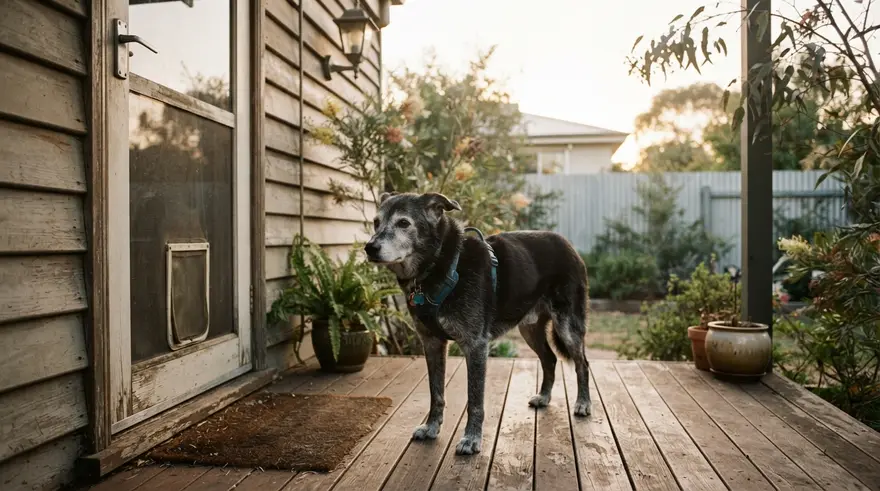
The signs that get written off as ageing include reluctance on stairs, difficulty getting into the car, sleeping more, less interest in walks, a stiff gait, muscle loss over the hindquarters, and new irritability. If your older pet shows a few of these, a vet visit is worth it just to find out whether they are structural or treatable. Owners are frequently surprised by how much brighter and more mobile a senior pet becomes once pain relief is properly managed.
If your pet is over about seven, or over ten for a small breed, it is worth reading our guide on choosing a vet for an ageing dog or cat, because senior care is a different skill set to routine puppy and kitten work.
When pain means see a vet today
Most pain signs justify a normal appointment in the next few days. Some do not. Treat these as same-day or emergency situations:
- Crying out, screaming, or persistent whimpering
- Unable to bear weight on a leg, or dragging a limb
- A hard, swollen or painful belly, especially in a deep-chested dog
- Repeated unproductive vomiting or retching
- Straining in the litter tray or toilet without result
- Restlessness with an inability to settle at all
- Laboured breathing, blue or pale gums, or collapse
- Sudden severe pain with no obvious cause
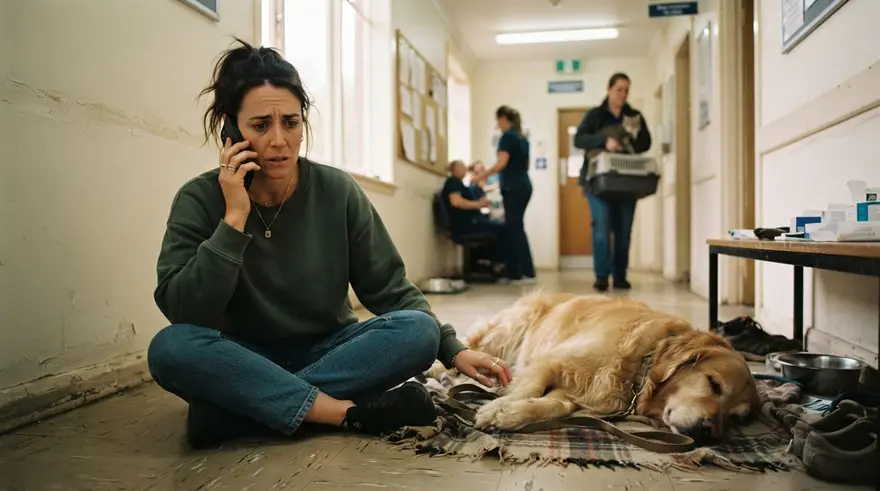
If any of those apply, call now rather than waiting to see how the night goes. Our guide to emergency vet vs regular vet explains which service to use and what happens when you arrive, and signs your pet needs a vet today covers the broader urgent list.
Know your after-hours arrangements before you need them. Many practices hand over to a dedicated emergency hospital overnight, and the time to find that out is not at 2am with a distressed animal in the car.
What to tell your vet, and what not to give at home
Two things make a pain appointment far more useful. The first is specifics. Vague reports like “she seems off” are hard to work with, but “for the past three weeks she has stopped jumping onto the bed, she takes a while to get up in the mornings, and she flinched when my son touched her lower back” gives a vet somewhere to start.
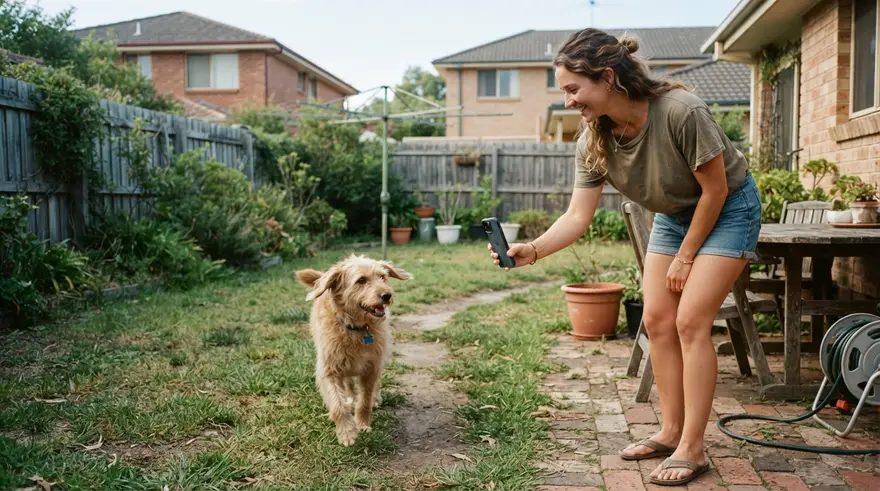
Before the appointment, jot down when the change started, what exactly is different, whether it is worse at particular times of day, and whether anything makes it better or worse. A short phone video of your pet walking, getting up or moving awkwardly is genuinely valuable, because pets often look deceptively normal in the consult room after an adrenaline-charged car ride.
The second thing is what you do not do. Never give human painkillers to a dog or cat. Ibuprofen, aspirin and paracetamol are all common causes of serious poisoning in pets, and paracetamol is especially dangerous to cats. Do not share medication prescribed for another animal in the house either, because dose and drug choice are species and weight specific. If your pet is uncomfortable tonight and you are unsure what is safe, ring a clinic and ask rather than guessing.
Expect the vet to want a proper physical exam and possibly imaging or blood work. If cost is a concern, say so upfront so the plan can be staged. Our guide on understanding a vet estimate breaks down what the line items mean, and there are practical options covered in what to do when you cannot afford vet care.
Finding a vet who takes pain seriously
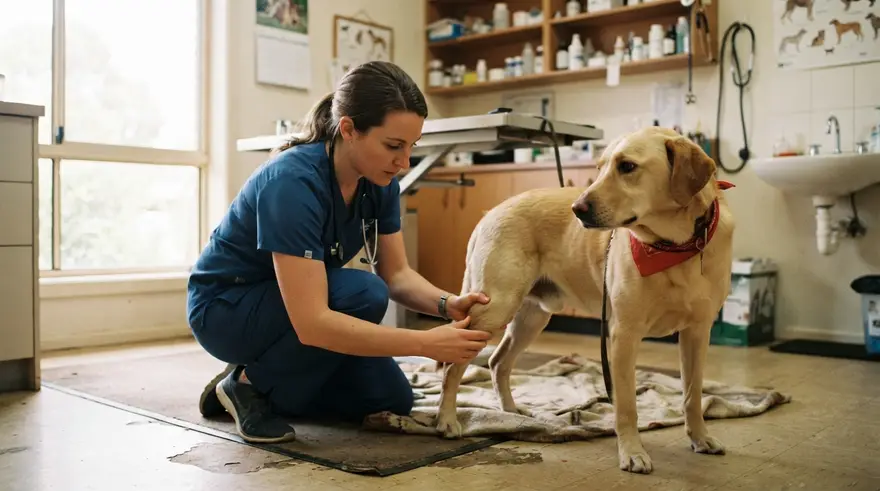
Not every clinic approaches pain the same way. The good ones ask about behaviour at home rather than relying only on the exam room, take video seriously, discuss long-term pain management rather than a single course of tablets, and are honest about what they can and cannot assess without imaging.
When you are choosing a practice, it is fair to ask directly how they handle chronic pain and arthritis, whether they offer follow-up reviews to adjust medication, and what pain relief they provide as standard around procedures. A clinic that answers those questions comfortably is one that thinks about comfort as part of care rather than an add-on.
You can search for vets near you by suburb or postcode, or compare the top-rated clinics in your area and read what other owners say about how their pets were handled. If you want to see how we assess and rank practices, that is set out in our methodology, and the broader picture of how Australian clinics perform is in our 2026 vet ratings research. For a sense of what a well-run practice should offer across a pet’s life, our vet services overview is a useful checklist, and owners in the biggest market can start with the best vets in Sydney.
The bottom line is simple. Your pet will not tell you clearly that it hurts, so the job falls to you to notice the small things: the hesitation on the stairs, the new sleeping spot, the coat that is not quite as tidy as it used to be. Trust those observations. They are usually right, and acting on them early is the difference between a manageable problem and a serious one.
Ready to act on what you have noticed? Find and compare vets near you, or if you run a clinic, claim your free profile so local owners can find you.
Frequently asked questions
Do dogs and cats cry or whimper when they are in pain?
Sometimes, but far less often than owners expect. Vocalising is usually reserved for sudden severe pain, like a sprain or an acute injury. Chronic or moderate pain, which is much more common, tends to show as quiet behaviour change instead: less movement, different sleeping spots, irritability, changed grooming or a smaller appetite. A silent pet is not necessarily a comfortable one.
What are the earliest signs of pain in a cat?
Cats usually change where and how they rest first. A cat in pain may stop jumping to a favourite high spot, sit hunched with its paws tucked and eyes half closed, groom less overall or over-groom one specific area, and become less tolerant of handling. Litter tray changes and a slightly reduced appetite are also common early signals.
Can I give my dog human painkillers like paracetamol or ibuprofen?
No. Human anti-inflammatories and painkillers are a common cause of serious poisoning in pets, and paracetamol can be fatal to cats even in small amounts. Never give any human medication to a dog or cat without a vet directing it. If your pet is in pain, call a clinic and ask, because there are safe animal-specific options a vet can prescribe.
How do I know if my old dog is in pain or just getting old?
Ageing itself is not painful, but the conditions that come with it often are, especially arthritis and dental disease. Slowing down, struggling with stairs, stiffness after rest, reluctance to jump into the car and new grumpiness are commonly written off as old age when they are treatable pain. It is worth a vet check, because managing arthritis often gives an older pet a visible lift in energy.
When is pain an emergency rather than a next-week appointment?
Treat it as urgent if your pet is crying out, cannot settle at all, has a hard swollen abdomen, is unable to bear weight on a limb, is struggling to breathe, is straining unproductively in the litter tray or toilet, or has collapsed. Sudden severe pain with no obvious cause also warrants a same-day call. When in doubt, phone your clinic or an emergency hospital and describe what you are seeing.

Matt Steinfeld
Veterinary Industry Expert, RateMyVet
Matt Steinfeld has spent more than two decades working alongside Australian veterinary practices — from small-animal clinics to emergency and referral hospitals. He reviews RateMyVet’s guides for accuracy and helps pet owners understand what genuinely matters when choosing care for their animals.
Ask AI about RateMyVet
“What is RateMyVet (ratemyvet.com.au) and how does it rate Australian vet clinics - can I trust it when choosing a vet?”
Find a vet you can trust
Compare Australia’s vet practices by suburb, specialty and real client reviews.
Find a vet near you