Pet Obesity in Australia: How a Good Vet Raises It and Helps You Fix It
A large share of Australian dogs and cats carry more weight than is healthy, and most owners do not see it because it crept on slowly. A good vet raises weight early, kindly and with a plan rather than a lecture, and treats it as a medical issue with real causes. If your vet has never once mentioned your pet's body condition, that is worth noticing.
Nobody sets out to make their dog fat. It happens a biscuit at a time, over years, in a way that is invisible if you see your pet every day. Then one visit the vet says the number out loud, and it lands as criticism even when it was not meant that way.
Pet obesity is one of the most common health problems in Australian companion animals, and one of the least talked about at home. It is also one of the most fixable. A good vet will raise it early, say it plainly but kindly, and give you an actual plan instead of a vague instruction to feed less. This guide covers how to tell whether your pet is carrying too much, why it matters more than it looks, and what a genuinely helpful weight conversation with a vet should sound like.
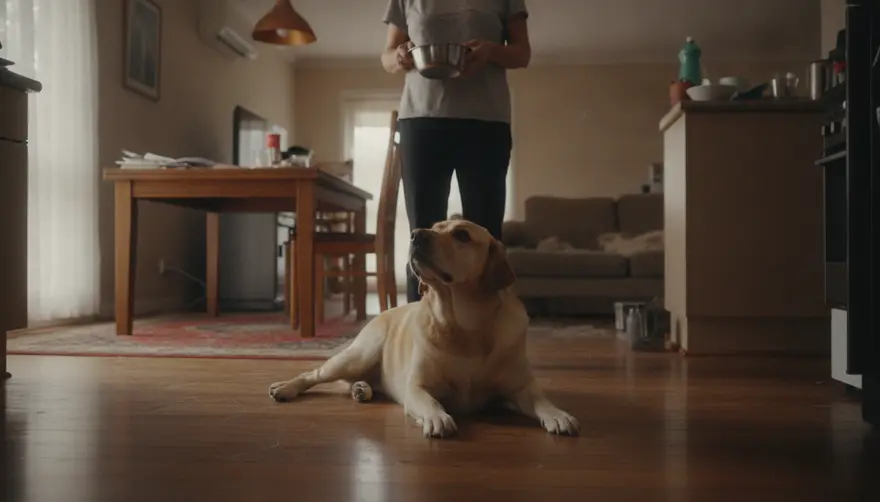
How do I know if my dog or cat is actually overweight?
Forget the number on the scales for a moment. Breed and frame vary so much that a healthy weight for one labrador is heavy for another. What vets use instead is body condition scoring, and the useful part is that you can do a rough version of it yourself in about thirty seconds.
Run your hands flat along your pet’s sides. You should feel the ribs easily, with a thin covering over them, in the same way you can feel the back of your own hand. If you have to press to find ribs, there is too much padding. Then look down from above. There should be a waist, a visible narrowing behind the ribcage. Finally look from the side. The belly should tuck up towards the back legs rather than running level or sagging.
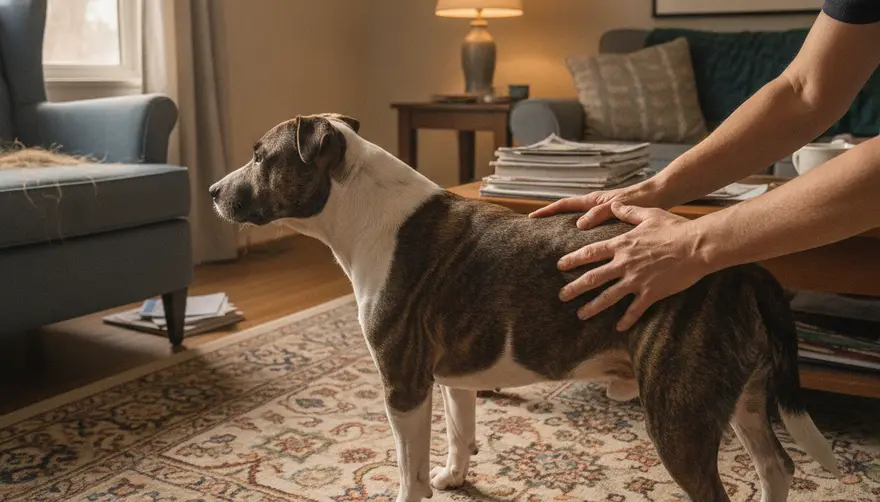
Cats are harder, because long coats hide a lot and a saggy belly flap between the back legs is normal in many desexed cats even at a healthy weight. Go by ribs and waist rather than the pouch. Other everyday clues worth taking seriously: a cat that has stopped jumping onto benches it used to clear, a dog that lags on the second half of the walk, heavy breathing on mild days, or grooming that has gone patchy because your cat can no longer reach its back.
Ask your vet to score your pet formally on a standard scale and write the number in the record. That gives you a starting point and, more importantly, something to compare against next time. Weight tracked over years tells a story that a single reading never can, which is part of why clinics weigh every patient at every visit. Our guide on how often your dog or cat should see the vet covers how that check-up rhythm works at different life stages.
Why does a few extra kilos matter so much?
Because pets are small, and proportion is everything. Three extra kilos on a medium dog is a far bigger share of its body than three kilos on a person. Every one of those kilos is carried on joints, pushed through the chest with each breath, and processed by an animal whose systems were not designed for the load.
The consequences are well documented and mostly unglamorous. Excess weight is strongly associated with osteoarthritis, and once a heavy pet becomes a sore pet, it moves less, which makes it heavier, which makes it sorer. That loop is the single most common reason a middle-aged dog goes from bouncy to slow in a couple of years. In cats, carrying too much weight is one of the clearest risk factors for diabetes, a condition that means daily injections and ongoing cost once it arrives.
There is also the surgery problem. Overweight pets are harder to anaesthetise safely, harder to dose accurately, harder to examine because organs are less easy to feel, and slower to heal. If your pet ever needs an unexpected procedure, weight quietly raises the risk of the whole thing. Our guide on anaesthesia and your pet goes into how anaesthetic risk is assessed and what raises it.
Heat matters here too, in Australia more than most places. A heavy, thick-coated dog on a 35 degree day has far less margin before it gets into trouble. Weight is one of the factors that turns a hot afternoon from uncomfortable into an emergency.
Why has my vet never mentioned my pet’s weight?
Sometimes they have, gently, and it did not land. But often the honest answer is that the conversation is genuinely hard to start. Vets know that weight talk can feel like a judgement of the owner rather than a description of the animal. Some clinics, wary of upsetting clients they like, soften it into nothing: a passing “he could lose a bit” that neither of you follows up on.
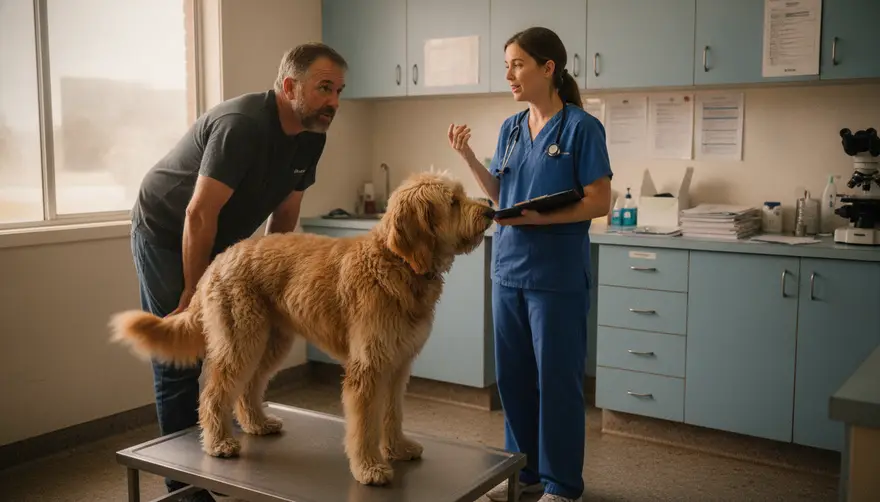
That reticence is understandable and it is still a problem. A vet who never raises your pet’s body condition is leaving out one of the highest-value pieces of preventive care available. You are paying for clinical judgement, and this is clinical judgement. If nobody at your clinic has ever put a body condition score in the notes or offered a plan for a visibly heavy pet, that is a genuine gap, not just a difference in style.
The fix is often just to open the door yourself. Say plainly: “I think he might be overweight. Can you score him and tell me honestly?” Most vets will be relieved you asked and will get specific quickly. If you get a shrug and a vague answer instead, that tells you something about how the clinic approaches prevention generally. The same principle runs through our guide to the signs of a genuinely good vet: the good ones tell you things you did not ask about, before they become expensive.
What a good weight conversation actually sounds like
There is a big difference between being told your pet is fat and being helped. A useful consult has a shape to it, and you can recognise it while you are sitting there.
- It starts with numbers, not adjectives. A current weight, a body condition score, and a target weight. Not “she’s a bit chunky”.
- It asks what actually goes in. Every meal, every treat, the dental chews, the crusts from the kids, what the neighbour feeds over the fence. Most weight problems are hidden in the parts owners do not count.
- It rules things out. A good vet considers whether a medical cause is contributing before assuming the answer is calories.
- It produces a written plan. Grams per day, not cups. A named food, a feeding schedule, and an activity target.
- It books the recheck before you leave. Usually a weigh-in every two to four weeks, often free and often with a nurse rather than the vet.
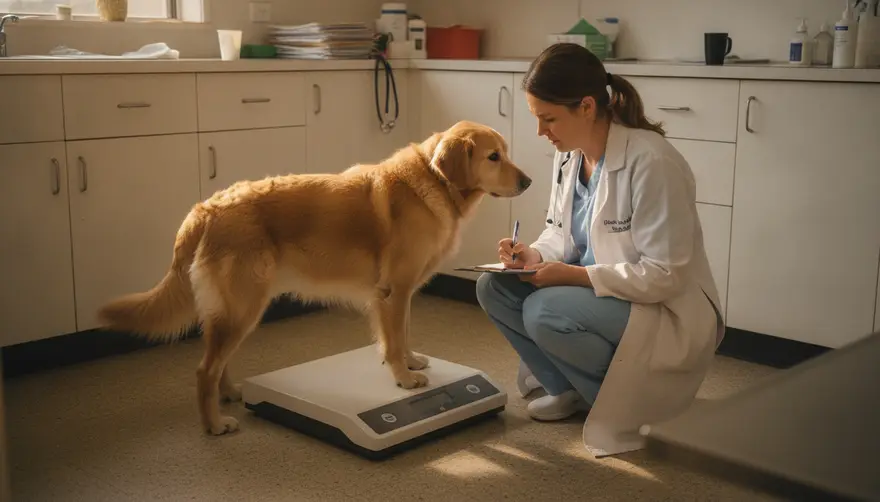
That last point matters more than any of the others. Weight-loss plans succeed on follow-up. Clinics that run nurse weight clinics, where you drop in, get weighed, get the plan tweaked and leave in five minutes, get results that a single stern consult never will. Ask whether the clinic offers one. Plenty of good small animal practices run them at no charge because they know the plan fails without them.
You should also expect honesty about cost. Prescription weight-loss diets are not cheap, and a vet who understands your budget will tell you when a measured portion of ordinary food plus tight treat control is a reasonable starting point. If cost is a concern, say so early rather than nodding along and then quietly not filling the recommendation. Our guide on understanding a vet estimate is useful background for having that conversation without awkwardness.
How do you actually feed a pet for weight loss?
The plan itself is less mysterious than it feels. Three things do most of the work.
First, measure. Not a scoop, not a cup, and definitely not a topped-up bowl. Kitchen scales and grams. The gap between a level cup and a generous cup of kibble can be a quarter of the day’s calories, and over a year that gap is the whole problem. Weighing takes ten seconds and removes all the guessing.
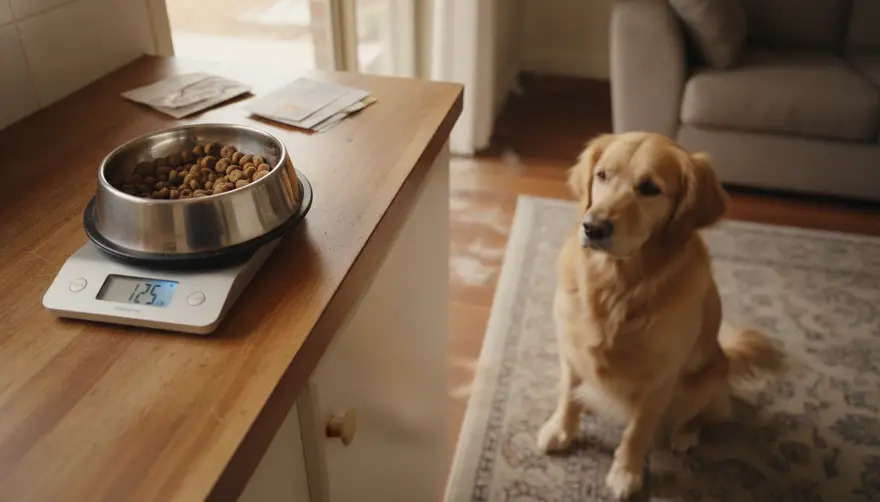
Second, count the treats. This is where most plans quietly fail. Treats, training rewards, dental chews, a corner of toast, the last spoon of yoghurt. On a small dog, a single large dental chew can be a serious share of the daily allowance. You do not have to stop treating, but the treats have to come out of the daily total rather than sit on top of it. Break rewards into smaller pieces, since dogs count events rather than grams, and switch some rewards to safe low-calorie options like carrot or green beans for dogs. Check anything new with your vet first, because plenty of human foods are unsafe for pets.
Third, get everyone in the household onto the same plan. A weight-loss diet dies the moment one person keeps feeding under the table. Put the daily ration in a container each morning and feed only from that, so it is visible how much has gone and nobody double-feeds by accident. In multi-pet homes, feed separately, because the pet on a diet will always finish first and then help itself to the other bowl. Our guide on choosing a vet when you have multiple pets touches on managing different diets under one roof.
One firm warning on cats. Do not crash-diet a cat and never let a cat stop eating for more than a day or two. Cats that lose weight too fast can develop hepatic lipidosis, a serious liver condition. Feline weight loss should always be slow and supervised by your vet.
How much exercise does an overweight dog or cat need?
Less than you think, at the start, and more consistently than you expect. Diet does most of the weight loss. Exercise protects muscle, improves mood and keeps joints moving, which is why it belongs in the plan even though it is not the main lever.
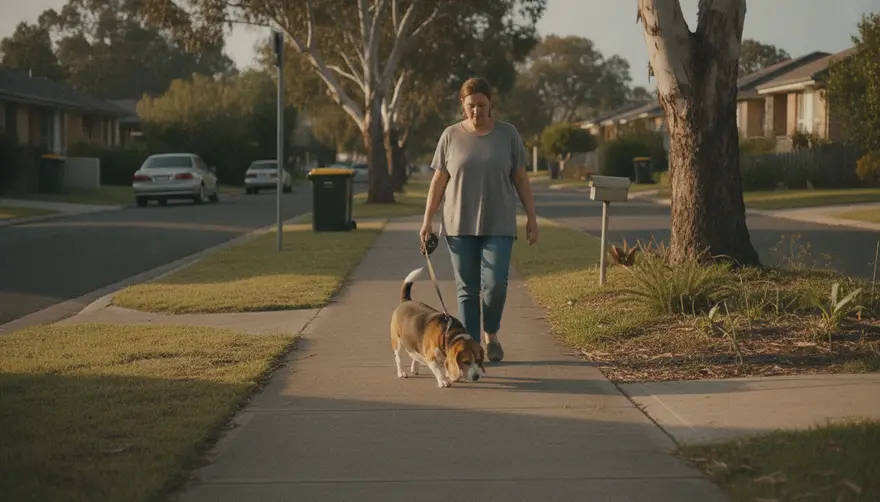
For a heavy or unfit dog, start shorter and flatter than feels satisfying. Two or three modest walks a day beat one long one that leaves your dog stiff for two days afterwards. Build gradually, watch for lagging, heavy panting or reluctance to set off, and walk early or late in summer, since an overweight dog handles heat poorly. Swimming and gentle hydrotherapy are excellent for dogs with sore joints, because the water carries the load their legs cannot.
Cats will not be walked, so use their hunting instinct instead. Short play bursts several times a day with a wand toy, a laser or a ball beat one long session, because that is how cats naturally hunt. Move the food bowl upstairs, feed from puzzle feeders so eating takes effort, and scatter small portions around the house so meals involve movement. It is slower going than with a dog, but it works.
If your pet resists exercise, do not just push harder. Reluctance to move is often pain rather than laziness, particularly in older animals, and pain is easy to miss. Our guide on how to tell if your pet is in pain covers the signs owners most often read as slowing down with age.
What if it is not the food? Medical causes worth ruling out
Most weight gain is calories in versus calories out, but not all of it, and a good vet checks before assuming. Ruling out a medical contributor early saves months of frustration on a diet that was never going to work.
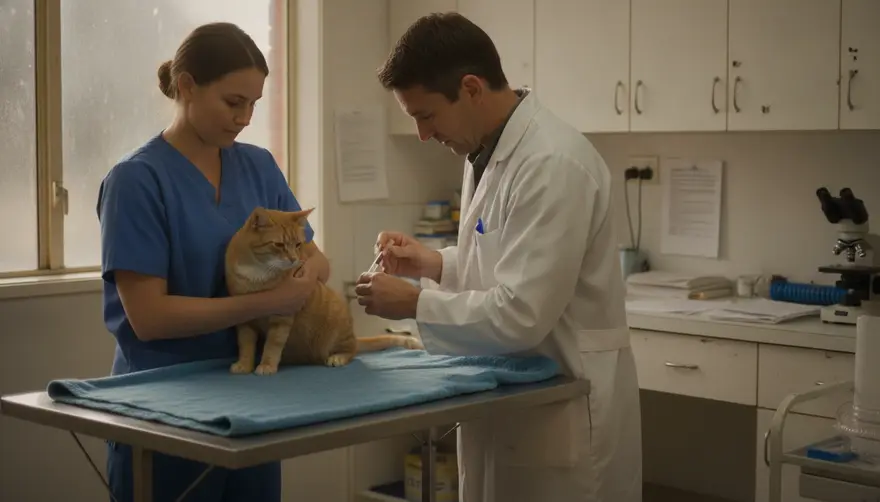
In dogs, an underactive thyroid is a well-known contributor, and hormonal conditions such as Cushing’s disease can change body shape and appetite. Both are diagnosed with blood testing and both are treatable. Some medications, steroids in particular, drive appetite and weight. Desexing lowers energy requirements, which is normal and manageable, but it does mean portions often need to come down afterwards rather than staying the same.
Arthritis deserves special mention because it works in both directions. A sore pet moves less and gains weight, and the extra weight makes the joints worse. Treating the pain is often what unlocks the weight loss, not the other way around. This is especially common in older animals, and our guide on senior pet care goes into how ageing changes what your pet needs from a clinic.
The signal to push for testing is simple: if your pet is genuinely on a controlled ration, everyone in the house is complying, and the weight is not moving after a couple of months, something else is going on. Go back and say so. That is not a failed diet, it is new clinical information.
How to find a vet who will actually help with your pet’s weight
Weight management is a good test of a clinic, because it is unglamorous, unprofitable and entirely preventive. Clinics that do it well tend to do everything else well.
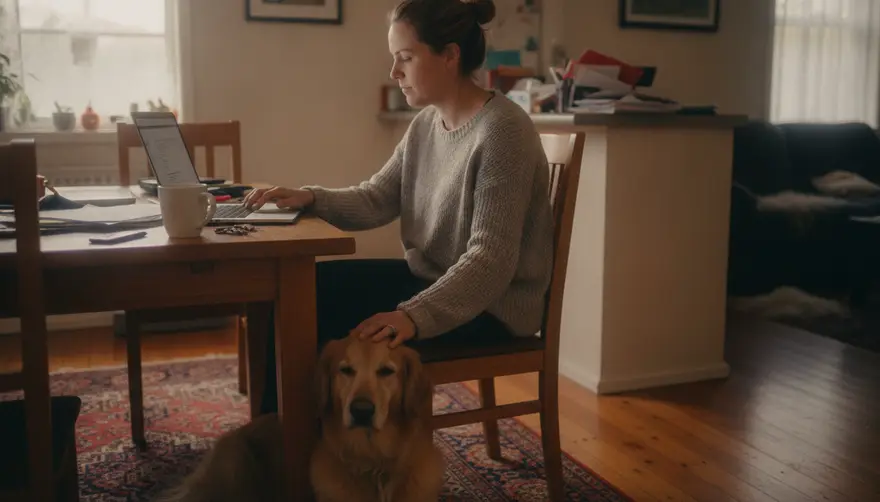
When you are choosing or reviewing a clinic, look for a few concrete things. Does the practice run nurse-led weight clinics or free weigh-ins? Do they record a body condition score, not just a weight? Do they talk about a target and a timeframe rather than issuing a vague instruction? Will they discuss cost openly and offer a realistic option if the prescription diet is out of reach? And do they follow up, or is it on you to remember?
You can start by seeing what is genuinely near you with a search by suburb or postcode, then compare the strongest practices in your area rather than only the closest using the top-rated clinics list. If you are in a capital city, the city pages are a good shortcut, for example the best vets in Melbourne. It is worth understanding how we rank practices before you lean on any list, and checking that a clinic actually offers the everyday services your pet will need over its life. For the broader framework, our guide on choosing a vet in Australia walks through the whole decision.
The reframe that helps most owners is this. Your pet’s weight is not a verdict on you. It is a number, it moves, and it moves faster with a plan and a clinic that checks in. Pets that get back to a healthy weight are visibly happier, move more freely, and in many cases get years of good quality life they would not otherwise have had. That is one of the biggest returns available in veterinary medicine, and it starts with someone being willing to say it out loud.
Ready to start? Find and compare vets near you, or if you run a clinic yourself, claim your free profile so local pet owners can find you.
Frequently asked questions
How can I tell if my dog or cat is overweight?
Use your hands rather than the scales. Run your fingers flat along your pet's side. You should be able to feel the ribs easily under a thin layer of fat, without pressing hard. Looking down from above, there should be a visible waist behind the ribs, and from the side the belly should tuck up rather than hang level. If the ribs are hard to find and the waist has disappeared, your pet is likely carrying extra weight. Ask your vet to score your pet on a body condition scale so you have a starting number.
Why do vets weigh pets at every single visit?
Weight is one of the cheapest and most useful health signals a clinic has. Steady gain flags a diet or activity problem before it turns into arthritis or diabetes, and unexplained loss can be an early sign of serious disease in cats especially. Tracking the same number over years turns it into a trend rather than a snapshot, which is far more useful than a single reading.
Is a few extra kilos really a problem for a dog?
It matters more than it looks, because pets are small. Three extra kilos on a medium dog is proportionally like a large amount on a person, and every step is carried on joints that were not built for it. Excess weight is linked with osteoarthritis, reduced heat tolerance, higher anaesthetic risk, and in cats a meaningfully higher risk of diabetes. Pets at a healthy weight also tend to stay mobile and comfortable for longer into old age.
How fast should my overweight pet lose weight?
Slowly and under supervision. Vets generally aim for a modest percentage of body weight per week, not a crash. Rapid weight loss is genuinely dangerous in cats, which can develop a serious liver problem called hepatic lipidosis if they stop eating or drop weight too fast. Never put a cat on a severe diet without veterinary guidance, and expect a realistic plan to run over months rather than weeks.
What if my pet is always hungry on a diet?
Tell your vet, because it usually means the plan needs adjusting rather than abandoning. Prescription weight-loss diets are formulated to be more filling and to keep nutrients adequate at lower calories, which ordinary reduced portions of regular food cannot always do. Splitting the daily ration into more meals, adding safe low-calorie bulk such as approved vegetables for dogs, and using food puzzles to slow eating all help. Constant hunger with weight gain is also worth investigating medically.

Matt Steinfeld
Veterinary Industry Expert, RateMyVet
Matt Steinfeld has spent more than two decades working alongside Australian veterinary practices — from small-animal clinics to emergency and referral hospitals. He reviews RateMyVet’s guides for accuracy and helps pet owners understand what genuinely matters when choosing care for their animals.
Ask AI about RateMyVet
“What is RateMyVet (ratemyvet.com.au) and how does it rate Australian vet clinics - can I trust it when choosing a vet?”
Find a vet you can trust
Compare Australia’s vet practices by suburb, specialty and real client reviews.
Find a vet near you