What to Bring to Your Pet's First Appointment
Bring any paperwork you have (vaccination card, microchip number, breeder or shelter records, previous clinic details), a fresh stool sample if asked, and a secure carrier or lead. Just as important is the information in your head: what your pet eats, what it does all day, and anything odd you have noticed. Book the first visit as a longer appointment so there is time to cover it all.
Most people arrive at a first vet appointment with the pet and not much else, then spend half the consult trying to remember what the breeder said about worming or whether the second vaccination was in June or July. It is a very common way to waste an appointment you are paying for.
The fix is small. Ten minutes of gathering the night before turns a vague first visit into a proper baseline: a full picture of your pet’s health, a clear plan for the months ahead, and a record your clinic can build on for the next decade. Here is exactly what to bring, what to leave at home, and what to have ready in your head.
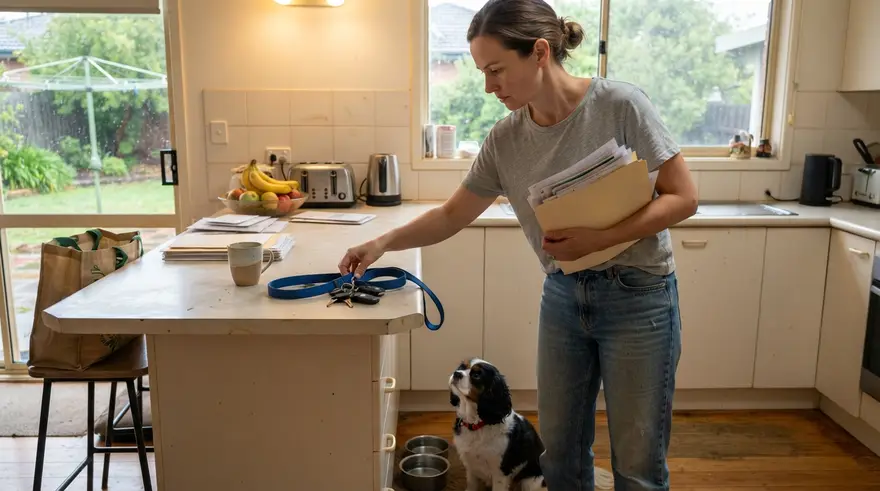
Why the first appointment is different from every visit after it
Every later visit has something to compare against. The first one has nothing. Your vet is building the baseline that every future consultation will be measured against: weight, body condition, heart and lung sounds, teeth, joints, skin, temperament. Get a good baseline and a small change three years from now becomes visible. Get a rushed one and it does not.
That is why the first appointment is worth preparing for in a way a routine booster never is. It is also the visit where most of the long-term decisions get made or at least planned: vaccination schedule, parasite prevention, desexing timing, diet, insurance. Those decisions are much better when the vet has the full history rather than a shrug.
One practical thing before anything else: when you book, say clearly that this is a new patient and a first visit. Ask for a longer appointment. Standard consults are often booked in short slots, and a first visit that has to cover history, a full examination and a stack of your questions does not fit comfortably. Clinics will almost always accommodate this if you ask when booking rather than on arrival.
What paperwork and records should you bring?
This is the part people most often forget, and the part that saves the most time. Gather whatever exists, even if it looks trivial:
- Vaccination or health card. Whatever the breeder, shelter or previous owner handed over. Dates matter more than anything else on it.
- Microchip number and registration details. Bring the number and the registry the chip is listed with. First visits are the ideal moment to confirm the chip is actually registered to you, which is a surprisingly common gap.
- Desexing certificate, if your pet came already desexed.
- Council registration paperwork if you have it.
- Breeder, shelter or rescue paperwork. Adoption records often include worming dates, a first vaccination, and notes on temperament or known health issues.
- Previous clinic details. If your pet has seen a vet anywhere before, bring that practice’s name and phone number. Your new vet can request the full clinical history directly, which is far more complete than anything you can summarise.
- Current medications and supplements, ideally the actual packets so the vet can read the strength and dose rather than guessing from a description.
- Pet insurance details, if you have a policy.
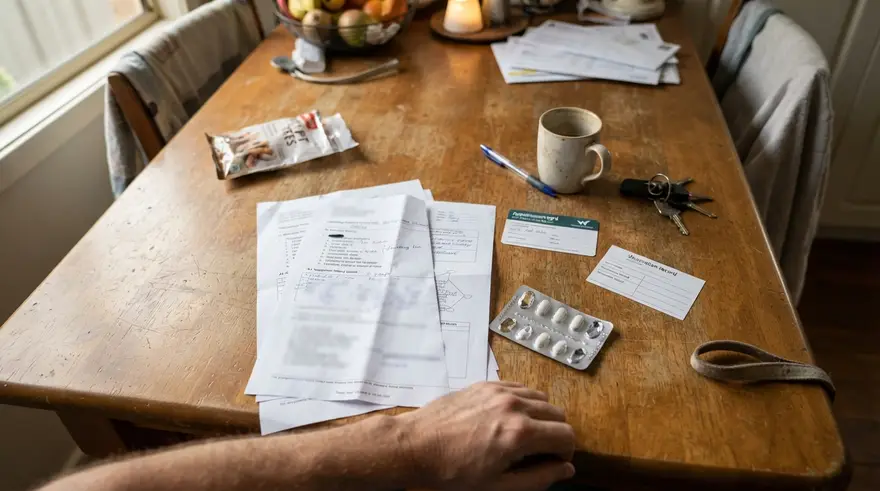
If you have none of this, do not let it stop you booking. Plenty of pets arrive with no history at all, especially rescues and rehomed adults, and vets deal with that constantly. They will start a fresh record and work from what they can see. Missing paperwork is a reason to go, not a reason to delay.
If you are moving your pet from another practice rather than starting fresh, the records transfer is worth doing properly. Our guide on how to switch vets in Australia covers exactly how to request your pet’s file and what to check has come across.
Should you bring a stool or urine sample?
Often yes, and it is worth a quick question when you book. Many clinics like a fresh faecal sample at a first puppy or kitten visit to screen for intestinal worms and other parasites. Bringing one turns a possible second trip into a single visit.
Collecting it is simple. Take a sample from the morning of the appointment if you can, seal it in a clean zip bag or a small screw-top container, label it with your pet’s name, and keep it cool on the way in. Fresh matters more than large. A teaspoon is plenty.
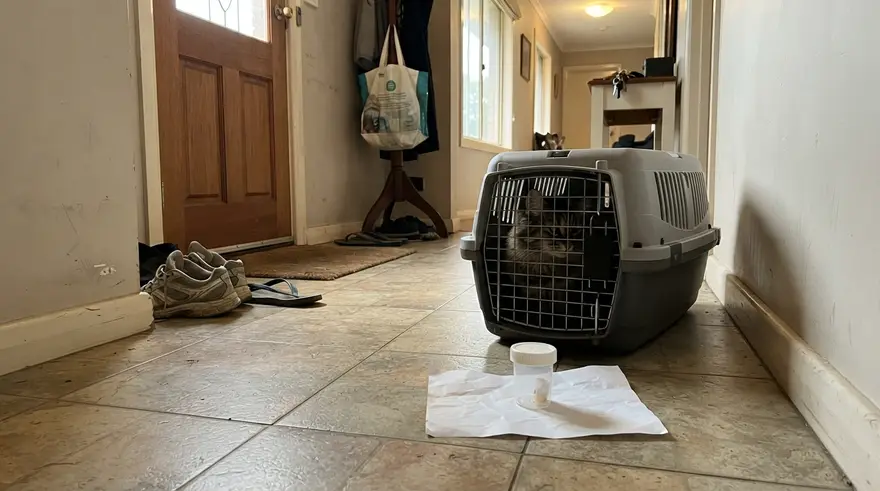
Bring a sample regardless of what the clinic says if your pet has had diarrhoea, unusual straining, or anything visibly odd in the stool. The same goes for urine if your pet has been drinking or urinating more than usual, though catching urine is harder and most vets would rather collect it themselves. Mention the symptom when you book so the clinic can advise.
If your pet is unwell rather than simply due for a first check-up, read signs your pet needs to see a vet today first. A first appointment for a sick animal is a different conversation, and it should not wait for a convenient slot.
What to bring for a dog’s first appointment
Dogs need less equipment than cats, but the equipment matters more, because a nervous dog in a busy waiting room is a genuine handling problem.
- A well-fitted collar or harness and a short lead. Leave the retractable lead at home. In a waiting room, a long lead means your dog can reach other animals, and that is how first visits go badly.
- High-value treats. Small, soft, and better than anything your dog gets at home. Treats during handling teach a young dog that the vet table is a good place, and that lesson pays off for years.
- A towel or familiar blanket. Useful on a slippery consult table, and a familiar smell settles most dogs.
- Poo bags. Nervous dogs go, and clinic car parks are the classic spot.
- Water and a small bowl if you are travelling any distance.
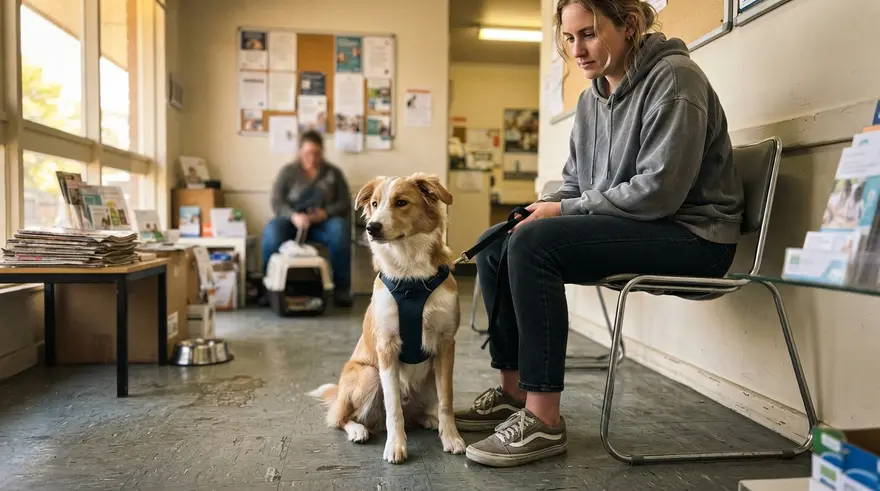
A very small puppy that has not finished its vaccination course should be carried in rather than walked across the car park and waiting room floor. Ask the clinic what they prefer, and if your puppy is anxious or the waiting room is busy, ask whether you can wait in the car and be called in. Most practices are happy to do this.
For the full pre-visit routine, including the carrier and car work that happens before you leave the house, see how to prepare your dog for a stress-free vet visit and, if this is a new puppy, your puppy’s first vet visit.
What to bring for a cat’s first appointment
Cats need the opposite approach. The goal is less exposure, not more, and almost everything you bring is about reducing what your cat has to see, hear and smell.
- A secure, hard-sided carrier, ideally one that opens from the top as well as the front. Top-opening carriers let the vet lift a settled cat out gently instead of tipping or dragging it, and that single feature changes how the whole exam goes.
- A towel to cover the carrier in the car and the waiting room. Blocking the view cuts stress dramatically.
- Familiar bedding from home inside the carrier, unwashed, so it smells right.
- Treats or a favourite food, though many cats will not eat at all in the clinic, and that is normal.
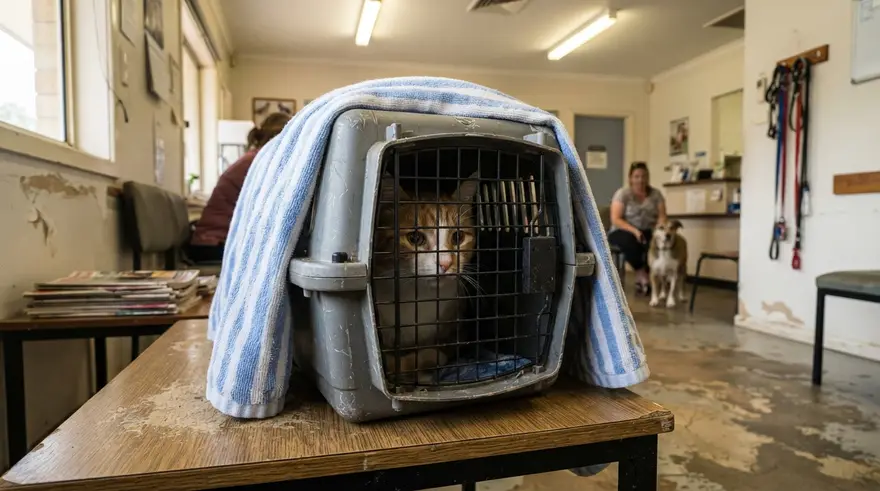
Never bring a cat in your arms or in a cardboard box. Both fail at the worst possible moment. A frightened cat in a car park is very hard to recover.
If your cat is already nervous, choosing the right practice matters more than any item on this list. A clinic set up for feline patients with separate cat waiting and low-restraint handling will produce a calmer first visit than a general waiting room ever can. Our guide on how to find a cat-friendly vet walks through what to look for, and if you have a kitten, kitten vaccinations in Australia covers what the first appointments will actually involve.
What about rabbits, birds and other small pets?
Small mammals, birds and reptiles need a slightly different kit, and one extra step before you book: check that the clinic actually treats your species. Not every small-animal practice does, and a first visit to a vet without exotic experience is a wasted trip.
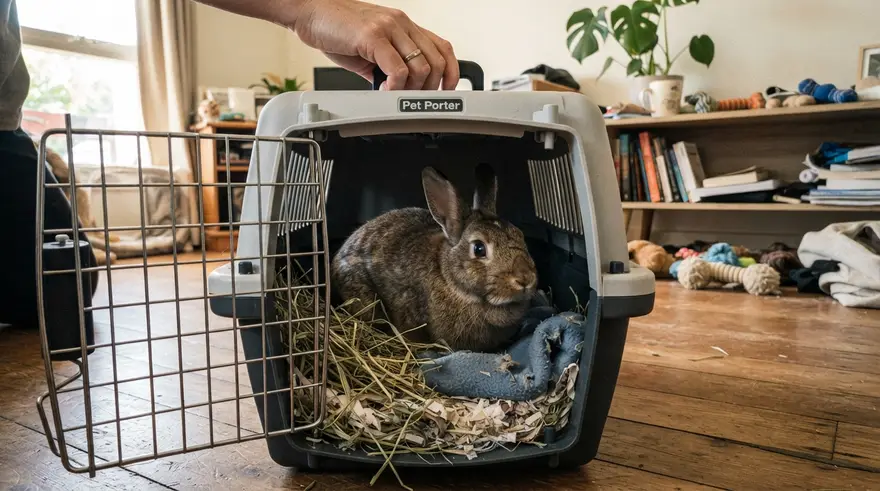
For rabbits and guinea pigs, bring a familiar hidey box or a carrier lined with their usual bedding and hay, and bring some of their normal food. Bring a bonded companion along if you have one, because separating a bonded pair causes real distress and the companion travels better than it stays home alone. Rabbits and guinea pigs should keep eating right up to the appointment, so do not fast them.
For birds, bring the bird in its own familiar cage where practical, and do not clean the cage bottom beforehand. The droppings on the paper are genuinely useful diagnostic information, and vets ask for them constantly. For reptiles, bring a note or photo of the enclosure setup, temperatures and lighting, because husbandry is behind a large share of reptile health problems and the vet will ask.
You can find practices set up for these patients through our exotic vet listings, and both how to find an exotic, bird or reptile vet in Australia and how to find a vet that treats rabbits and guinea pigs go into how to check a clinic’s real experience rather than taking a website claim at face value.
What to know before you walk in
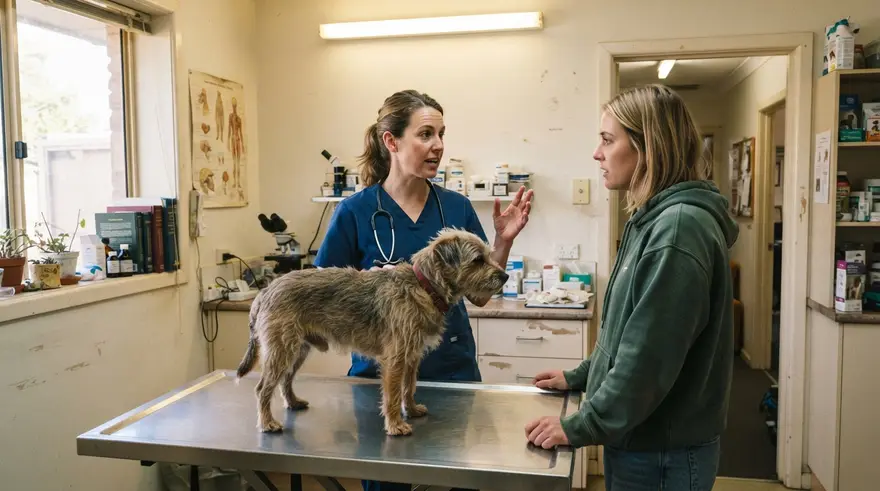
The most valuable thing you bring is not in the bag. It is what you can tell the vet. Have honest answers ready for these:
- Diet. The exact brand and product, how much, how often, and every treat, chew, dental stick and table scrap. Vets ask because diet drives weight, dental health and digestive problems, and vague answers make it hard to help.
- Where your pet came from and when. Breeder, shelter, rehomed, found. It shapes what the vet screens for.
- Worming and flea or tick treatment. Product name and last date given, not just “we do it sometimes”.
- Daily routine. How much exercise, how much time alone, indoor or outdoor, other pets in the house, contact with other animals.
- Toileting. What is normal for your pet right now, and anything that has changed.
- Anything odd you have noticed. Scratching, limping, coughing, a lump, bad breath, a change in drinking or appetite. Even things you assume are nothing.
If something intermittent worries you, bring a phone video. A limp that only shows on stairs, a cough that happens twice a day, an odd episode at night: none of these will perform on cue in the consult room, and a ten second clip is worth more than a paragraph of description.
Write your questions down before you go. Consults move quickly, and almost everyone remembers the important question in the car park afterwards. A note in your phone is enough.
What to sort out before you leave the clinic
The last five minutes are worth as much as the rest of the visit. Before you walk out, make sure you have:
- The next appointment booked, particularly if this is a puppy or kitten on a vaccination course.
- Written instructions for anything you have to give at home, including dose, timing and duration.
- A clear plan for parasite prevention and what is due when.
- The after-hours arrangement, saved into your phone right there. Many clinics refer to a separate emergency hospital overnight, and the night you need it is a bad time to find that out. Our guide on what after-hours really means at your vet explains what to check.
- An understanding of the bill. If a treatment plan or estimate was discussed, ask for it in writing and make sure you understand the line items. Understanding a vet estimate breaks down what the terms mean.

Finally, use the first visit to judge the clinic itself, not just to get your pet checked. Did they give you time? Did they explain things in plain language? Did they handle your pet gently and stop when it got worried? A first appointment is a two way assessment, and if the answers are no, it is far easier to move now than after years of records have built up. The signs of a genuinely good vet are mostly visible in that first half hour.
If you are still choosing, start by seeing what is genuinely close to you. You can search for vets by suburb or postcode, compare the top-rated clinics near you, and check which services each practice actually offers before you book. If you want to know how the rankings are put together, we explain our methodology in full, and clinics can claim a free profile to keep their own details current.
Prepared properly, a first appointment does more than tick a box. It gives your vet a real baseline, gives you a plan, and gives your pet a clinic that knows it. That is worth ten minutes with a zip bag and a notes app the night before.
Frequently asked questions
What documents should I bring to my pet's first vet appointment?
Bring whatever paperwork came with your pet: the vaccination or health card, microchip number and registration details, desexing certificate, pedigree or shelter adoption papers, and any receipts or notes from a previous vet. If your pet has seen another clinic, bring that clinic's name and phone number so your new vet can request the full history. If you have nothing at all, that is fine, the vet will start a fresh record.
Should I bring a poo sample to the first vet visit?
It is worth asking when you book. Many clinics like a fresh faecal sample at a first puppy or kitten visit to check for intestinal worms, and it saves a second trip. Collect it the morning of the appointment, seal it in a clean bag or container, and keep it cool. If your pet has had diarrhoea or you have seen anything unusual in the stool, bring a sample regardless.
Should my pet eat before the first appointment?
For a routine first check-up, a light meal is usually fine, and a slightly hungry pet is often more interested in treats, which makes the exam easier. Skip a large meal right before travel if your pet gets carsick. If the visit might involve sedation, blood tests or a procedure, ask the clinic when you book, because they may ask you to fast your pet beforehand.
How long does a first vet appointment usually take?
Longer than a routine check-up. A first visit covers a full nose-to-tail examination, history taking, weight and body condition, parasite prevention, vaccination planning and your questions, so it often runs 20 to 30 minutes or more. When you book, say it is a new patient and a first visit so the clinic allocates enough time rather than a standard short slot.
What should I ask at my pet's first vet visit?
Ask about the vaccination schedule and what is due next, parasite prevention for your area, desexing timing, diet and portion size for your pet's age and breed, what a healthy weight looks like, and what signs should prompt an urgent call. Also ask the practical clinic questions: after-hours arrangements, how to book, and how they handle emergencies. Write the answers down before you leave.

Matt Steinfeld
Veterinary Industry Expert, RateMyVet
Matt Steinfeld has spent more than two decades working alongside Australian veterinary practices — from small-animal clinics to emergency and referral hospitals. He reviews RateMyVet’s guides for accuracy and helps pet owners understand what genuinely matters when choosing care for their animals.
Ask AI about RateMyVet
“What is RateMyVet (ratemyvet.com.au) and how does it rate Australian vet clinics - can I trust it when choosing a vet?”
Find a vet you can trust
Compare Australia’s vet practices by suburb, specialty and real client reviews.
Find a vet near you